Writing book reviews for books I read in June when it’s only September? I am gaining on myself. Wonderful. But it looks like I’ll be breaking June into at least two installments because the list is too long for one blog post.
Let’s dive in.
I have considered becoming an L. M. Montgomery expert. To that end, I ordered a bunch of books (most of which are biographical tomes) through the bookshop. But with the memoir, biographies, anthologies, and commentaries, I ordered some fluffier, random things, among which were the two books I read first in June; I slipped them in as a break from book club reads before sinking into my “have to” reads.
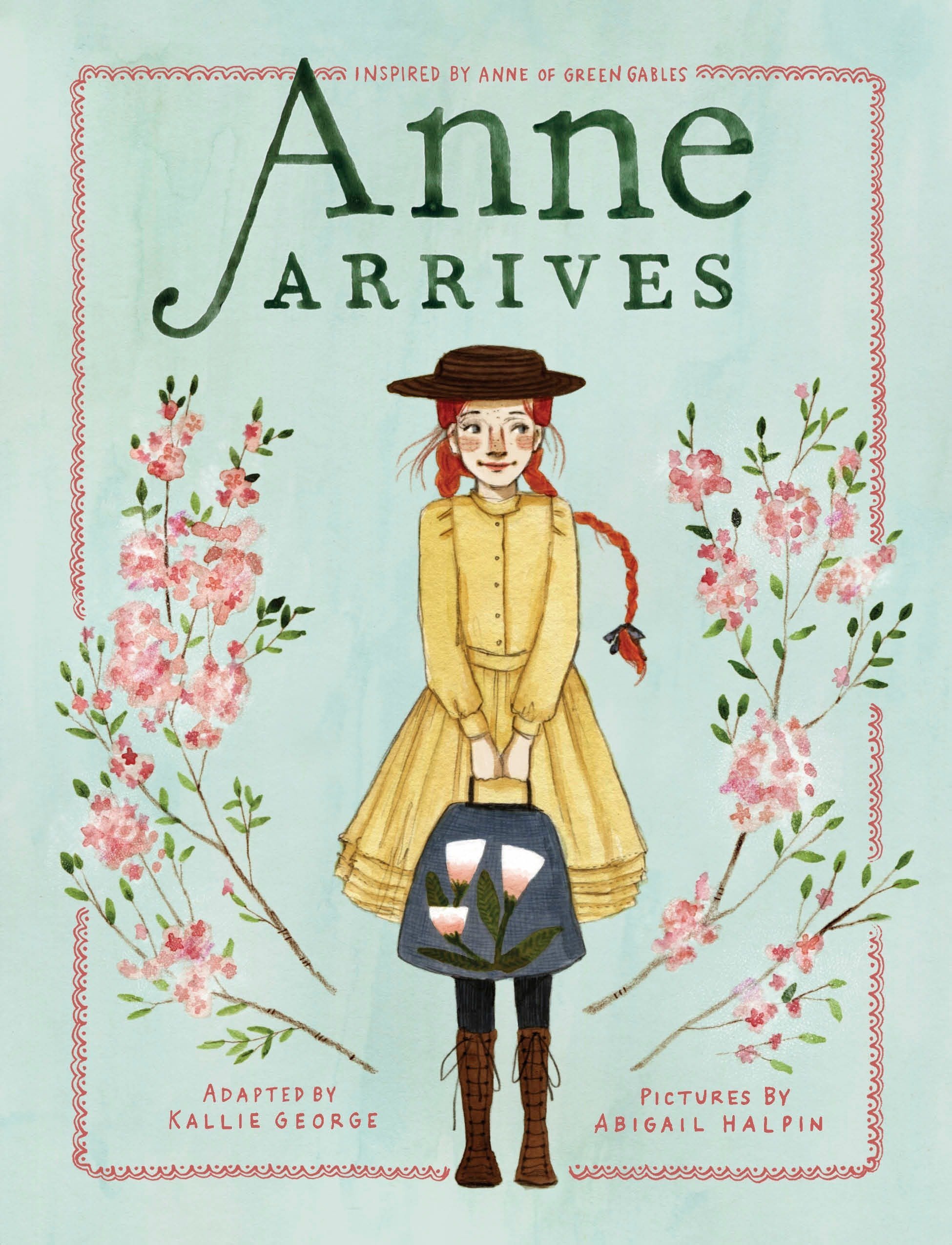
Anne Arrives by Kallie George and illustrated by Abigail Halpin is the first in an early readers series (currently at 6 titles) based on Anne of Green Gables. All the books get glowing reviews and I’m trying to figure out what they are for, really. For a small child of an Anne fan seems the most likely—to make a new Anne fan before that kid will be able to read the original. I loved the illustrations, and while it’s cute enough, it definitely doesn’t add anything to what already exists (except the art). It would make great early reading or bedtime reading, and I would imagine the rest of the series would also be nice for that, if you can find them or find the complete set.
Nothing more to add. Loved the illustrations. Great for what they are meant to be.
In the past few years, I have tried following some adaptation and fan fiction trails away from books I have read (like Jane Austen’s Pride and Prejudice, Sherlock Holmes, and Shakespeare’s Hamlet). I have had pretty limited success with these forays. Eventually, I peter out as the adaptations get increasingly bad. But I thought it okay if I read a couple Anne adaptations.
And one exploring Marilla’s past, when she was Anne’s age upon arrival in Avonlea?
Okay, to be honest, I was torn going into this. I don’t like to muddy the waters of Montgomery’s actual work (in my head), but I have often thought about this character and how she became the stern, somewhat bitter, but then softened woman who would function as Anne’s mother. In the end, I couldn’t resist seeing how another fan imagined Marilla developing toward Montgomery’s Marilla on the page. (For those of you not in the know, that means this book is about Anne’s adoptive mother when she was a teenager, a few decades before Anne of Green Gables opens. Since Marilla was from the same small town—Avonlea—where Anne then grows up, many of the places and people are ones that we as Anne fans will recognize.)
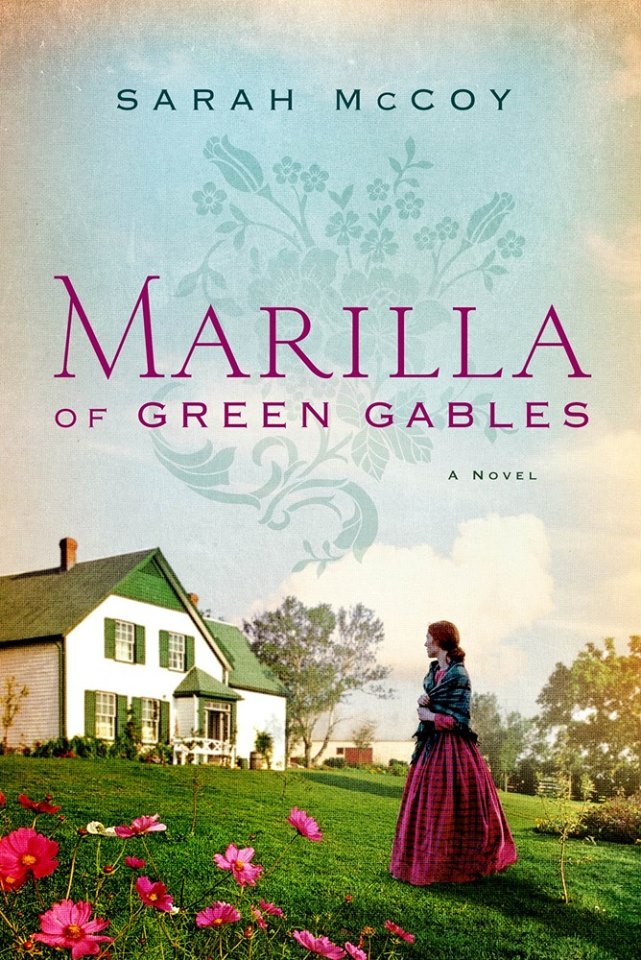
Marilla of Green Gables by Sarah McCoy was the cozy, easy read that I needed at the beginning of June. (It was one of the busiest times of my life and also one of the most stressful and painful. I’m being totally serious.) So, thanks for that. However.
I would give Marilla a 3.5, being rather nice. I had a pleasant time reading it. I liked it, even. The bummer was that this is not Marilla. And it’s not Matthew, either, to some extent. (Also, Marilla’s closeness with Rachel Lynde at that early stage doesn’t really jibe with the original series, either.) I had to decide early on that this was just a distinct character for a new story, just let go and read the book like a historical fiction of its own accord. Because I have read the Anne series dozens of times; I just didn’t believe this was the girl who would become Marilla. It wasn’t far off—and I understand why McCoy would have found it difficult to plumb Marilla’s childhood depths while keeping it cozy and keeping it comprehensible to modern readers—but the whole point of Anne in Marilla’s life is to shoehorn some light and love and softness in there, where there was mostly hardness and duty. Yet, even by the end of Marilla, she hadn’t been hardened by her circumstances. And she begins with a zest for life and an imagination much like Anne’s. As a fan, that doesn’t even begin to compute. Part of the deal with Marilla and Anne is that Anne grows on Marilla, but Marilla never relates to her. They are just such different creatures, and that’s okay; love and respect can happen even so.
Let’s just pretend that this book isn’t about Marilla, then, but some other lady named Marilla from another fictional Avonlea. In that world, this was the right tone of book for me when I needed a little chill, a little old-fashioned placement, a quieter world. Though I knew that this romance (which is largely what it is) was always going to be a tragedy (and maybe some people don’t?), I liked the placement, the historical setting, the story. I was bummed it had to be a tragedy, though, because it had all the makings of an actual romance with a typical romance ending. And that would have been nice. (You know what would have been nice? If this were about a different Avonlea character from the decades before Anne. Then it could have ended romantically, too. I suppose it also would have been nice if it was just a tragic, deep dive into the real character of Marilla, a child starved for affection with a teen heartbreak just a minor aspect of the serious, narrow life that made her the woman she would become (yes, with some hint at a “sense of humor” and a soft chamber of her heart).)
And I didn’t even mention the abolition nonsense. I mean, abolition, great. But what place it had in this book was not at all, or securely in the background. Oh wait, I forgot we were pretending this was not the same Marilla.
In that case, the book was acceptable. A nice little read with some perhaps too saccharine bits.
Oh yeah, and those headaches weren’t migraines. I’m sick and tired of authors doing a disservice to migraineurs the world over when they write them in but don’t understand them at all.
I wouldn’t read Marilla of GG again. I’m not sure who I would recommend it to—people who like historical romances with level 1 spice and not overly literary aspirations, I suppose. I had a nice time while I was there. I learned zero about Marilla because, quite frankly, Marilla wasn’t there.
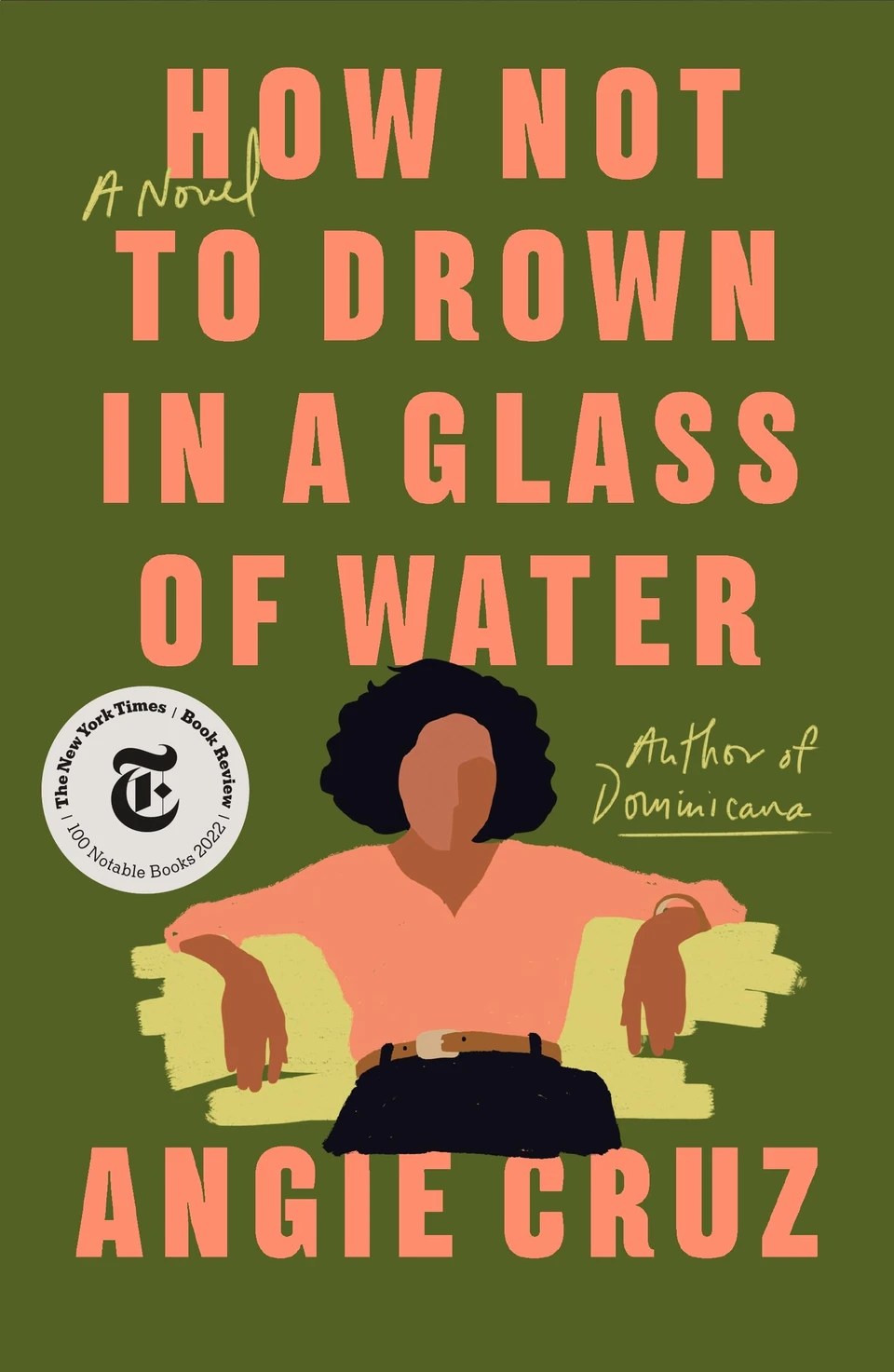
Then I started back in on my book club reads with How Not to Drown in a Glass of Water by Angie Cruz.
I am teetering back and forth on a four-star review.
Blurb: It’s 2019 and Cara Romero is a New York Dominican immigrant (and legal resident) in her fifties who has lost her long-time factory job. The loss is going on two years, so she’s been sent to job placement counseling in order to keep receiving checks from the Obama administration during the Great Recession.
This is one of those books that I finished and thought, Did I like that book? Or not? In fact, I felt that way during the book, too. The setup was a little cheesy, but it probably could have been done in a way that wasn’t cheesy? Was this book cheesy? Or was it just really interesting? Man, was I on a roller coaster with the MC, which I think was the appropriate response to her character. I was really looking forward to the book club discussion when I found out I wouldn’t be there because of a niece-zoo emergency. (Just kidding. The emergency was that I needed to be there to see her see all the animals for the first time.)
I was happy to read a book about the financial struggles during the Great Recession because my family lost a lot during the crash of 2007 and were some of those people struggling. In fact, my husband re-routed and went back to school, starting over in a new career because of it. Yet I rarely hear or read about it.
It is told as a series of interviews, with one-sided conversations on the page as Cara speaks to the counselor. Occasionally, we also get some paperwork that Cara fills out for the counselor. I think I found the narrative structure a little tedious, at times. Like a normal delivery would have been more immersive, more engaging. Yet I liked the idea of the structure. Hmm…
The narrative voice—Cara’s—is super interesting.
Many reviewers recommend it as an audiobook, which is hard for me to believe, but they say hands-down the audio is better.
PS. Didn’t love the title or the cover. Though I love the reason for the title. Furthermore, why was there not a middle-aged Dominican woman doggy-paddling in a glass of water on the cover?
I think the people who didn’t like this book were looking for something fluffy and fun, more popular fiction, and perhaps missed it had a ton to say about trying so hard and failing, about sin and forgiveness, about hypocrisy, and mostly about the experiences of immigrants to America. There were so many levels to the last part of this, and that alone makes me think, yes, I believe this is a valuable book. I’m glad I read it. I wish others would too. But I know plenty of them won’t quite know how to take it; (you are meant to read between the lines and to stick with Cara while also acknowledging her pretty terrible foibles).
Goodness. Yes. In the end, I am glad I read this book and would recommend it, but want you to know what you are getting into, a little. I think Cara is one of the strongest, most complex, and most dynamic characters that I’ve ever read. She would make for a brilliant study of character, but she also takes an open mind and paying good attention to make sense of her without either villainizing her or excusing her.
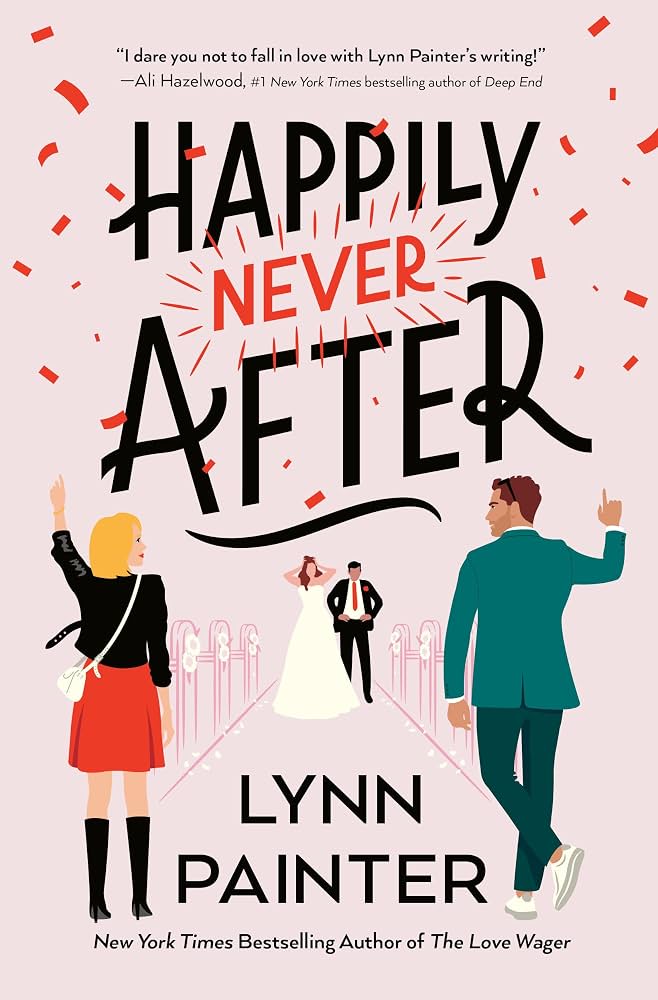
Then I threw another fluffy book in between book club reads, cuz I could. This time, it was Happily Never After by Lynn Painter.
Blurb: When Sophie discovers she’s been cheated on right before her wedding, she hires Max to crash the ceremony in a way that will reduce any inconveniences for her… and deeply embarrass her soon-to-be ex. When Max contacts her later to ask if she’ll help him in his side-gig of wedding-out-er, she’s on board. The two become partners in this lucrative and satisfying venture until the wedding they’re meant to crash is Max’s ex. Then, they both have stuff to deal with.
I have read Lynn Painter before, but only her YA. (See Betting on You review HERE.) Based on these two reads, I’m going to posit that I like her YA better. Plus, her YA ratings are consistently higher. This could be because of the audience (like Gen Z reviews more enthusiastically, more kindly?), but that’s just an off-handed hypothesis.
Happily Never After was fun to read, anyway. I loved the premise and liked the book. Another pass-through in editing could have done away with most of my complaints, except…
(Warning: nitpick gone rogue ahead.) My biggest problem was the dark-haired heroine turning into a blonde before becoming desirable. WTF? How does that even work? And on behalf of all the girls who grew up “dark-featured” with constant comparison to blonde hair and blue eyes, why did Painter do this? It was arbitrary and unrelated to the story. And it made me roll my eyes as I felt more young women crawl back into their self-consciousness. It’s a damned shame, is what it is. Probably one Painter didn’t even think about, but that someone (agent, editor, publisher, sensitivity reader) probably should have caught, like the (too many) other “small” mistakes in the book.
That aside, the book is cute. A little funny. Spicy (level 3: open door) that basically worked. In other words, it was entertaining (their problems aren’t that deep, or that fleshed out) and that’s what I was there for, on a “brain break” between more serious, literary books. Fun, quirky side characters, too. And still love the premise.

I have been meaning to read Percival Everett’s Erasure since watching American Fiction a couple of years ago and absolutely loving it. (If you don’t know, Percival Everett’s (decades old) book was adapted into the movie American Fiction and was nominated for several Oscars and other awards in the months preceding the publication of his James, the book that would become the #1 bestseller and a huge award-winner—the undisputed book of the year for 2024.
This is a tough one to rate and a tough one to talk about. Also fraught.
Let’s start with the obvious, then. Having us read an entire novella within the novel felt like taking the satire too far. Especially since the novella was the poster child for the type of fiction that is being criticized. “Like watching porn to critique porn,” as someone at book club said. (Or was that me?) Like the racism was seeping past my defenses, whether I wanted it to or not. So from pretty early on I felt tricked, I felt defenseless and perhaps a little grumpy about it.
And for sure, I wasn’t picking up everything Everett was laying down. This is a highly academic and deeply intentional book. I didn’t always know what the heck I was supposed to get from the random quotes and asides, though it was clear they meant something. (We now know that there are references to Ralph Ellison’s Invisible Man, so a working knowledge of that text would help, but that’s just the tip of the iceberg). I don’t know how much I tolerate writing written over almost everyone’s heads. Perhaps James was what Everett had to say, but more mature or written by a more experienced and older author.
Note: There are lots of typos and line edit issues (like a missing word). Why haven’t they fixed that in all these years?
After book club and some time passed, I agree with my initial impression, that Everett realized his premises in a more mature way in James, but I still love the plot and the blurb behind Erasure, though I loved American Fiction and—though it was less bold (and more tender)—it did some amazing things (like its meta ending) in a way that was much more accessible and nuanced. I mean, Erasure is pretty much a sledgehammer.

More things to say: the title is clever, and it’s not just the MC who is being erased. The font size is ridiculous. If you don’t normally need reading glasses, you may for this one. I guess that makes sense because in many ways this is a young man’s book.
It is what it is. There is much to be impressed by, baffled about, and annoyed with (or offended by, depending on who you are)–lots and lots to think about. If that sounds like the kind of read you want, this is a classic of sorts. Also, for sure watch American Fiction.


