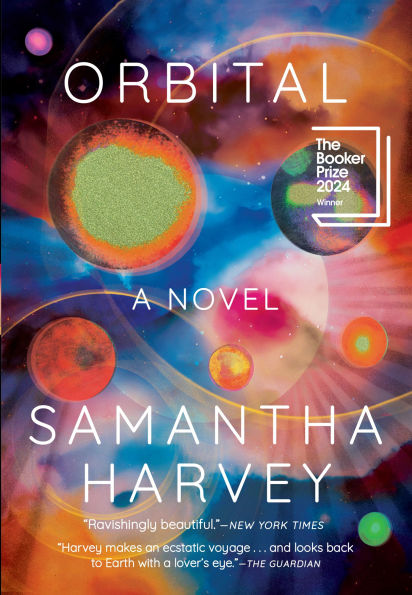
My main beef with Orbital by Samantha Harvey? It’s not a novel. And I don’t mean it’s a novella, either, though it’s definitely short enough to be that. No, it is a book of vignettes, so maybe a book of connected short stories? Not really even that. Also, it’s something akin to creative nonfiction—the characters are fiction, but much of it is science fact and rumination (although some complain that the factoids are too simplistic)—it strikes me as climate fiction, ultimately. If only it were truthful about this in marketing, its wild popularity would have translated into great reviews. (Maybe. But it did not.) But everyone read it, in like every book club, in 2025. I suppose its cover and shortness appealed, along with its winning of the Booker Prize. For novels. Sigh.
The Booker usually works for me. This one, I was confused by the award.
Blurb: It’s basically now, and six astronauts are in the space station. In the course of a day, hour by hour, each astronaut and their life is observed as the Earth is observed from above even more closely.
That’s about all that can be said. There is no plot. It is a science book, a nature book. It is a meditation of sorts, as well as observations of minutiae. It’s a vibes book. There are some interesting factoids about being in space and about the Earth. The writing is lyrical, sometimes very poetic. The stories and characters are extremely uneven.
I honestly don’t have much more to say. I didn’t hate it. I liked it some. It is more creative nonfiction than anything, I suppose, but many readers complain that what is in there is not very innovative or interesting if you know even a little about astronomy or space travel or any of the earth sciences. I could see that. I was okay with reading it, but after all the hype, it was a little like a rocky crash to earth. Perhaps if readers knew more of what to expect…
But then they might just be annoyed that it won the Booker because it’s not really a novel. If you’re going to read it for a book club, don’t expect much and you’ll set yourself up for success. It’s short, and it looks pretty while you’re reading it. And you’ll find some things to praise in there, I think.
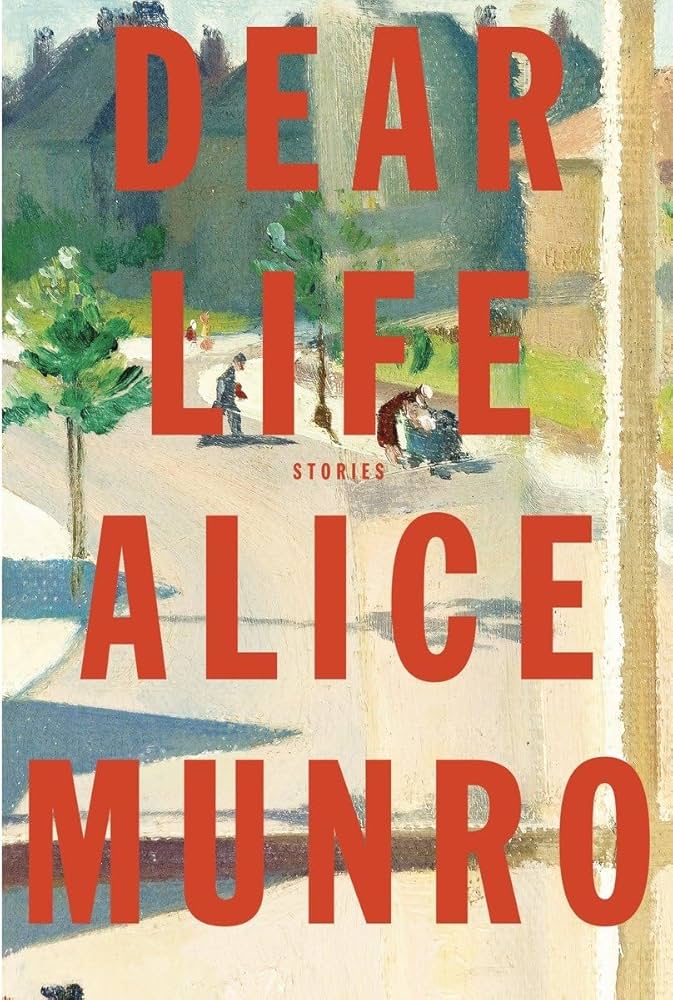
Now, Dear Life by Alice Munro is a book of short stories, and we all know it. Once my book club announced this read, however, there was an explosion of controversy. Turns out Munro—besides being one of the most iconic and preeminent Canadian writers—also has a daughter who has accused her mom of doing nothing as her stepfather abused her (the daughter), etc. Yeah, that’s really terrible. I, however, read books by just about anyone, and quite frankly never know who to believe in these cases, anyway. I’m an art-is-not-the-artist reader (read: anti-book-banning) and I have my (many) reasons, but I do sometimes find that a little background can shed some light on the reading. There was at least one person who refused to purchase or read this book, or to show up that month for book club. If that’s you, you might as well know now that Munro is currently considered a not-so-amazing human in some very real ways. But she is also considered an amazing writer. She has passed away. She won the Pulitzer and is a legend.
Blurb: Inasmuch as a blurb can be written for a book of collected short stories. Canada. Canada is a really important theme and recurring character in Dear Life. As well as a time period, which is 19450s-1950s (though not exclusively). The blurb on this collection tells us that the stories each depict a life-changing moment in an otherwise ordinary day. I can see that. These are quiet stories, but the writing gives them immense power. They are sparse and the landscape is sparse and sometimes even the people are sparse in ways. They are also a mood, but also amazing and classic writing (considering Munro is one of those writers who created the classic.)
And that title! It can have at least three meanings in just two words. They say, “I know what I’m doing.” And if you are into reading classics or a student of creative writing (and/or the short story), you kinda can’t skip Munro, somewhere along the line.
I don’t have a ton more to say about this book, either. If you want to read some (modern) classic short stories and you haven’t read Munro or you have already and enjoyed it, then this is a great collection to read. It is an important work to put on your shelf of short story collections. She’s not my favorite writer—I guess I find her themes a little depressing and slow because of the moral… let’s say differences of opinion—but I can appreciate what she has done for the short story and also the beauty of her writing itself.
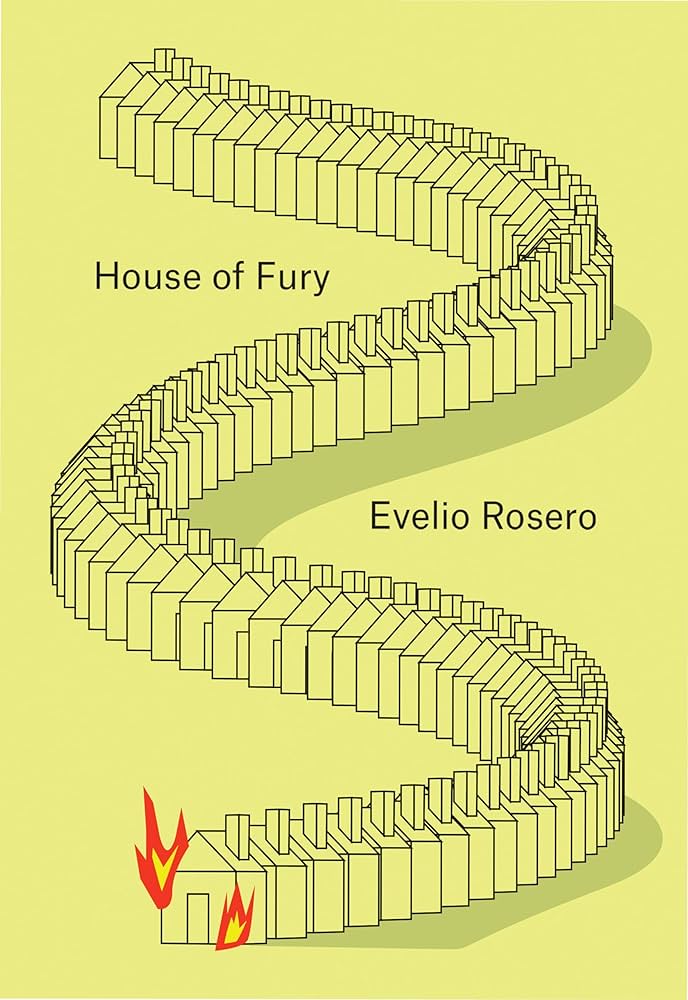
There are some big things to address here, which makes House of Fury by Evelio Rosero the third book in this review and the third book in this review to require an explanation prior to the review. Here is the long-winded version: I have been trying to avoid “rapey” fiction. I believe I have said this before in other reviews. This book—which I read in 2025—may have been the reason I started trying to avoid rape scenes. Because it has a lot of that. A lot. And also a lot of murder. And abuse, including child abuse. But, but, but! It is allegory for a specific part of Colombian history. Rosero apparently always writes like this, and while I can appreciate that the violence and shock (and all the other things about this book) get the job done as far as delivering this allegory, I really need a break from this type of content. I think many of us are feeling that right now.
But here’s the other thing. This is a great book. I was thrilled with the writing and with the stories. Which means I felt confused. Confused about my relationship to the book. Did I hate it? Did I love it? Yes and yes. Could I recommend it? Oh my. I don’t know. It is so very intense. But the writing is amazing. And if someone else was okay with reading a circus of a book dripping with human depravity, then, well, this one would be perfect for them. Was I glad I read it? I really can’t say, even now, months later. Yes and no. Ultimately yes, I think.
For once, I think the official blurb is perfect (except that it doesn’t give you the warning I just did). Here it is: “Taking place entirely on a single evening—Friday, April 10, 1970—in a large Bogotá mansion, House of Fury tells a hair-raising story. Nacho Caicedo, a magistrate of the Supreme Court of Justice, lives with his wife Alma and their six grown daughters. The Caicedos have planned an enormous celebration in their home. But before the party even starts, the family is shocked by two pieces of news: their teenage daughter Italia is pregnant, and Alma’s prodigal brother Jesús is expected at any moment. Guests from all levels of Bogotá society arrive, two earthquakes strike, and the party descends into debauchery, kidnap, and chaos. What begins as a black comedy unravels into a grim portent of the conflict that would rage across Colombia for fifty years. Like Rosero’s previous novels, House of Fury is an indelible, fantastical work that—with its unforgettable characters and unflinching, poetic, and humane voice—brings to light Colombia’s violent history.”
And once again, I just don’t have much more to say. The writing is lush and evocative. The stories are loopy (in more ways than one), fascinating. I was on the edge of my seat, though the plots are more literary-style than genre. I found sentences and passages to be breath-stealing. But I found it quite difficult to keep going in certain stretches, especially as the craziness and the violence only escalated with each turning of the page. Fury has that South American literature sound, and I love it. But it is perhaps the grittiest book I have ever read. Like a murderous clown—entertaining and artistic but disturbing as heck.
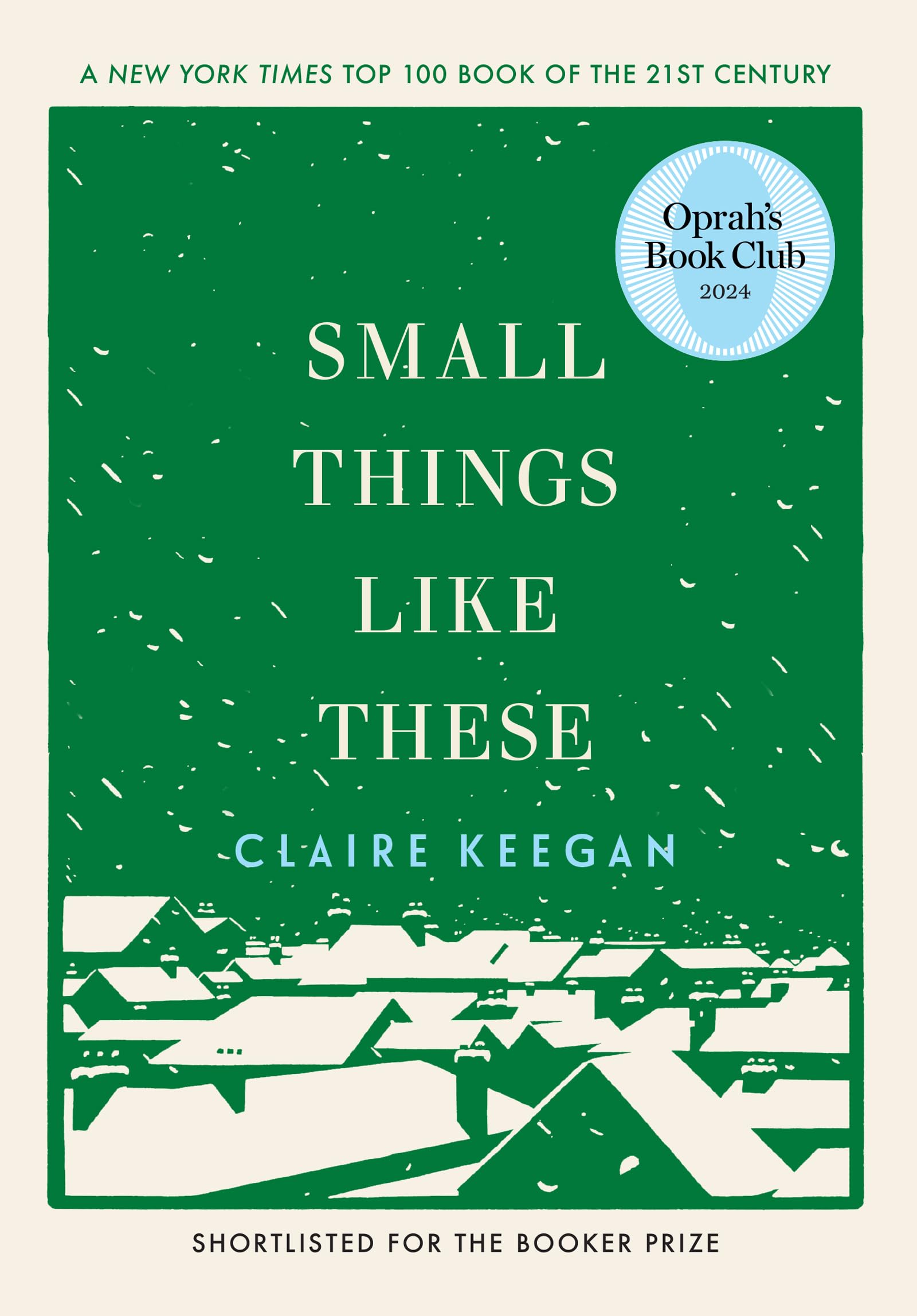
What is with literary fiction needing a disclaimer? Small Things Like These by Claire Keegan had to be forced on me by a book club before I would read one of her bestsellers because the publisher refuses to either publish in softcover, to price the slim volumes appropriately to their size, or to combine Keegan’s short stories into one or two volumes. Because yes, Small Things Like These is a short story. A long one. But a short story nonetheless, and not just because of its length. It has short story pacing, themes, style, etc. And when you go buy this short story at the store, it will be hardcover and $20.00. And it will be lined up next to her other short stories, each in its own $20 hard cover volume. Come on, now.
Blurb: It’s the 80s in a coal town in Ireland and Christmas is on its way. Bill’s just trying to make it through each day, providing for his family, when he can’t help but notice a young woman in his periphery. It would have been simpler if he hadn’t, but it’s too late for that now. He’ll have to make a choice, and that choice could upset his safety, his comfort, and his standing with the dominating Church.
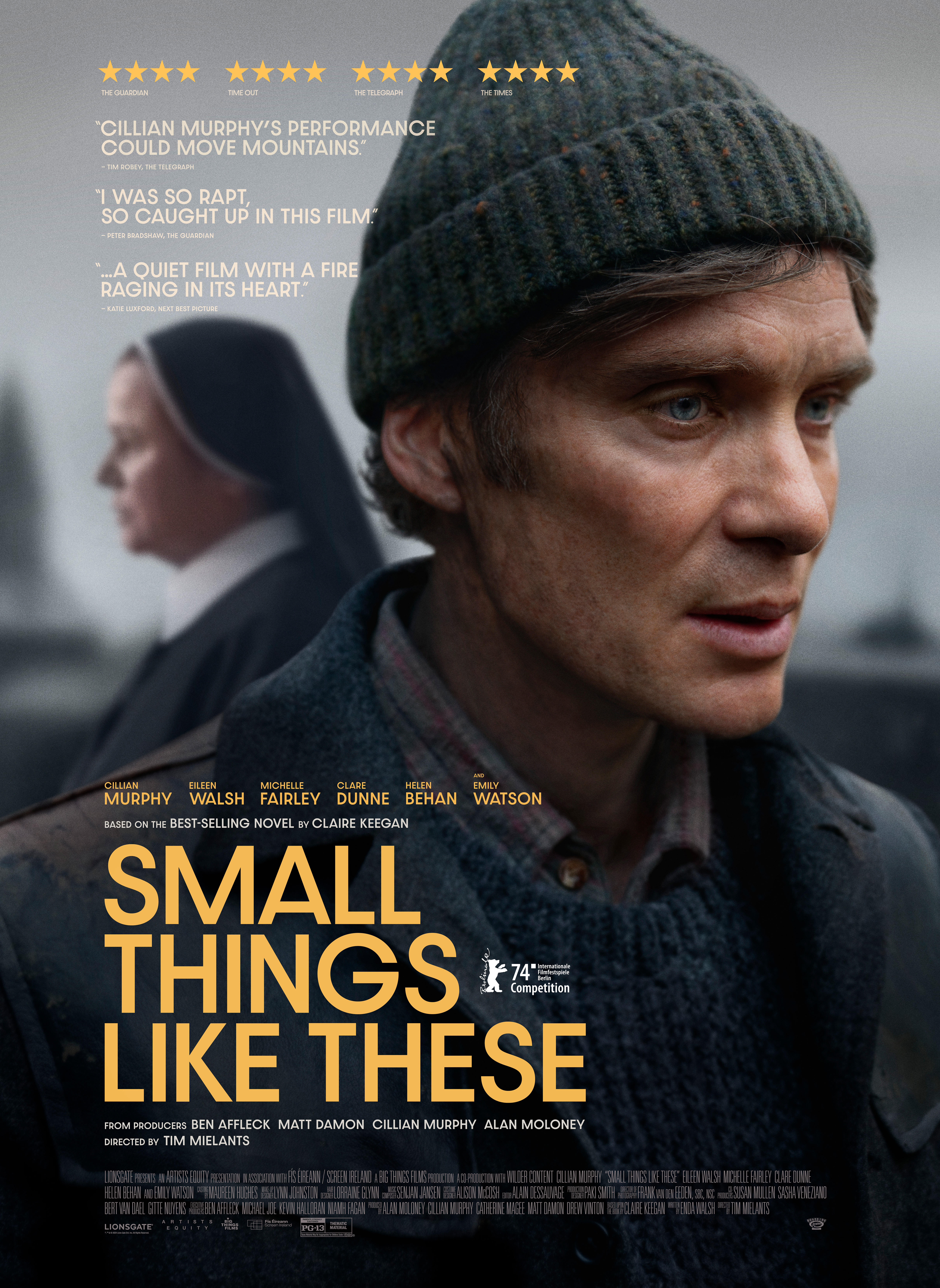
As far as short stories go, this is a great one, a modern classic, so to speak. If you like short stories and super-chill morality tales set in a bleak Ireland, then this is definitely your jam. Do I think we should all wait for the paperback collections (which may never come)? I dunno. Whatever you can live with. People in general tend to love Keegan’s stories and they sell. Small Things is one of the top sellers, with Foster. I would like to read that one too. I mean, time-wise they’re not much of an investment. And Small Things has a movie, which I watched right after reading this book. (That’s how this happened, anyhow: one of my book clubs picks a book movie in August every year and you are welcome to read the book before the viewing. I took it as an opportunity to be “forced” into reading some popular, lauded, Keegan.)
This is kind of a Christmas story (although it is a sort of anti-Christmas story, too), so I would settle it in that part of the year, for you. And since I have so few books to recommend during the holidays (even still), I would put this one there. Most people will appreciate it. Some will find it a little saccharine (even in the general grayness of it). It wasn’t my favorite, but it’s worth a read if you haven’t read any other Keegan—see if you’ll be a fan. It’s either this or Foster, to start.
The movie is about as long as a read of the 100-page book would take. Therefore, it covers all the same ground, many of the same details. It’s a very-well-rated movie, and it’s worth a watch, and it is also a great visual representation of the book. Not much to say there. I might have actually appreciated the movie more than the book, but both are commendable art in their own spheres. Good short story. Good movie.

Finally, a book that needs no explanation first, and that I just liked. Really liked The Dutch House. Which was maybe a bit of a pleasant surprise after reading Tom Lake as my intro to Ann Patchett. Just goes to show—giving an author a second chance isn’t always a bad idea. And I still plan to read Bel Canto and Commonwealth—titles that others praise as her “best,” even though Dutch House consistently receives the highest ratings. Plus Ann Patchett is always around, doing bookish things for the bookish world (I have seen her speak), and I’m happy now I can say, “I loved The Dutch House” if I ever meet her. Instead of whatever I wouldn’t have said about Tom Lake.
Blurb: Danny and Maeve have been exiled from the house they grew up in—a quirky and impressive estate near Philly that their father bought for their mother as he rocketed from poverty to opulent wealth. As they live their own adult lives, they can’t help but return again and again not only to the house, but to all the events that brought them the house and their eventual loss of it.
It’s a calm book with slow-moving waters over real depths. In other words, not plot-driven, just like any other of the literary books in this multi-book review. There are elements of mystery, but this is not a mystery. Since we jump back and forth in time, there are things we are wanting to know about what happened and why, and then things we want to know about what happens next. But it’s the atmosphere that excels here, and the fascinating characters (though don’t look for too many likeable ones). And the writing style. While I was utterly unimpressed with Tom Lake, I was so happy to sink into the narrative of Dutch House. And I would go back again.
Just like with the others, I don’t have so-so much to say, probably because it’s been awhile since I read it and I forget the details of any read after a while. But I did really like this one, and if you want to read Ann Patchett, I would suggest starting here, where her mastery is at its height.


