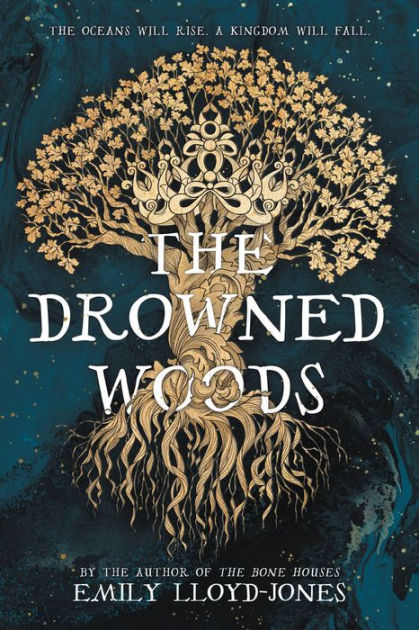
First things first, I guess; the title and the promise of The Drowned Woods (by Emily Lloyd-Jones) doesn’t work. There are no drowning woods. There is a city that goes underwater, mostly off-screen. Once you get past that (which I invite you to do right now), it’s smoother sailing.
Blurb: Mer plans to live the rest of her life as a water-diviner on the run, hiding from her past. But when she is approached by her former handler to pull a heist that will both mete out revenge on the king who ruined her life (and has his sights on the faerie kingdom) and set them both up with riches galore, how can she refuse? Especially when it’s just about the only way to avoid imprisonment. Again.
This Welsh-set, Welsh-inspired, D&D-style fantasy-heist was pretty okay, in the end. As someone at book club said, “It was exactly what it needed to be.” At least enough to be enjoyable while I was reading it and forgettable once I was done. You have your quirky side characters. The tragic backstory. The conflicted MC. A snake in the grass. A sort of love triangle. Even the disposable characters. It was cute and fun with adequate writing.
Complaints: the setup of the corgi spy (even on the back of the book) was not resolved. I waited for this the whole book. The ending, overall, was deemed by many to be two tidy and too happy. I can see the argument for the obvious, slightly more negative ending, which would also leave a reader without most of the romance. I don’t know that the romance was needed in this book, but I’m hardly ever going to complain about a romance. Or this happy ending. What YA fantasy heist would end sad (without getting panned)? I think, too, because this book is YA, there is a lot of focusing Mer’s trauma on a single moment, which felt too easy for me, not complex enough. I wanted more from her past and her pain and her inner conflict. Also, her powers were pretty limited by the imagination of the book, like to the point of silly. How many times was this talented water magician going to freeze the ground and make someone go sliding? When there was a world of possibilities within that power? Does magic respond to gunpowder? And Gryff’s beef with Mer (and his motivation) is pretty nonsensical to me, or at least unexplored.
On the plus side: I hear that the audio is pretty great. There were a lot of fun elements in this Welsh magical folklore world, including the idea of iron removal as a job that faeries source out to humans. The book is based on the legend of the sunken kingdom of Cantre’r Gwaelod in Cardigan Bay, Wales.
The Drowned Woods is a standalone book in the same universe as some of Lloyd-Jones’s other books. Wild Huntress officially comes “first” and Bone Houses—I am told—has more faeries (which appealed to me and to many other peeps at book club). They both have Easter eggs related to The Drowned Woods. As for other books that a reader of The Drowned Woods might like? The Daughters of Ys (M. T. Anderson), The Thorns Remain (J. J. A. Harwood), The Perilous Guard (Elizabeth Marie Pope) and Emily Wilde’s Encyclopaedia of Faeries series (Heather Fawcett).
Don’t have much more to say. It was a fun read. Occasionally I was like no thanks, but overall, it was a straightforwardly fine story with the right bells and whistles. Easy to flow through but not riveting for me. I had fun. I would be interested in the other books in the universe and definitely the others that were recommended at club.
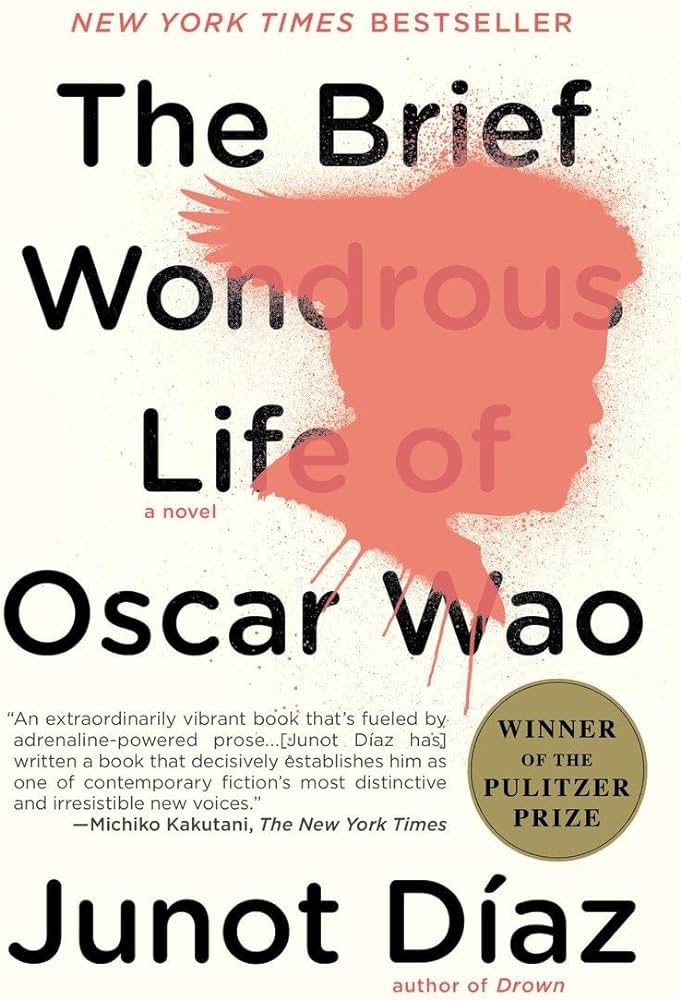
I have been meaning to read The Brief Wondrous Life of Oscar Wao by Junot Diaz since it won the Pulitzer in 2008 and landed itself on every “Best of the Decade” and then “Best of the First 25 Years of the 2000s” list. Every. One.
Blurb: Oscar Wao is cursed by the fuku of Trujillo, way back in the Domican Republic, where his mom survived just long enough to get out and his family keeps getting drawn back. Or is it a blessing that keeps them alive from generation to generation despite the horrors of a maniacal dictator? Oscar’s just trying to become the next J. R. R. Tolkien, a Domican-American author with at least one freaking girlfriend. He’s got so much love to give, but not the right looks for it. What is wrong with his life?
This is the 90s to early-naughts writing style that I fell in love with as a young woman. This is what made me starry-eyed and made the literary world seem so fresh and full of possibility. So for me, reading Oscar Wao was impossible to separate from my happy feelings of nostalgia. For me, it still felt exciting. For me, it’s still my jam.
Beyond that, Oscar Wao is engaging. I pretty much devoured the book, even as we switched POVs and kinda-maybe didn’t have a real plot (but so many stories!). It was like Olga Dies Dreaming and The Great Believers in that I learned as much history as I read (painlessly) as I was immersed in a fictional story. Yes, Wao was a little gritty for me. There were a lot of f-bombs and even more sex. But it’s not the first time that I have devoured something in an almost voyeuristic way, as an outsider (like Friends or New Girl but with tons more grit). The whole thing was just so engaging. Who are these people? And I don’t mean other just in the socioeconomic or racial-cultural differences, but in a whole-different-approach-to-the-world way, in every day and every moment (like in Friends or New Girl.) I suppose this is part of why we read.
Be prepared for a lot of Dominican slang and other Spanish which Diaz will not be translating for you (even entire sentences). Also be prepared for footnotes, bunched up largely at the beginning, some of them like a page long and in small print. You could skip them, but that would be a mistake. Yes, they are background and history, but they are snarky background and history which furthers the narrative voice, the tone of the book, and give us insight we need to understand.
I shouldn’t really tell you who the narrator is because that’s a surprise that comes like halfway through (which is a surprise I wasn’t actually wondering about.) But you might want to know that the narrator is a character that Diaz uses in his other writing and acts in those stories as a stand-in of sorts for Diaz himself. In fact, Wao began as a short story, and some people at book club wished it had stayed that way. It might make sense of the huge perspective- and time-shifts and might account for the opinion that some of the secondary characters are way more compelling than Oscar himself. There was some real worst-of-times stuff going on here, but I found levity at every turn, as well. Gritty levity.
Which all goes to say I enjoyed reading it. I thought it was a great book. It was perhaps too gritty for me. It might be a little outdated in style, but I don’t care about that. It felt nostalgic (again, in style) to me and I learned a ton about DR modern history and would recommend it if you are one of those literary readers. (Note: despite all the excitement and the Pulitzer and other big-time awards, Diaz only has two books of short stories and a children’s book (besides the individual stories and essays here and there) outside of Oscar Wao. Not that there’s anything wrong with that. But it’s surprising. I also don’t see any evidence that he is working on another novel, or at least that he’s still working on the project he mentioned years ago and then threw out.

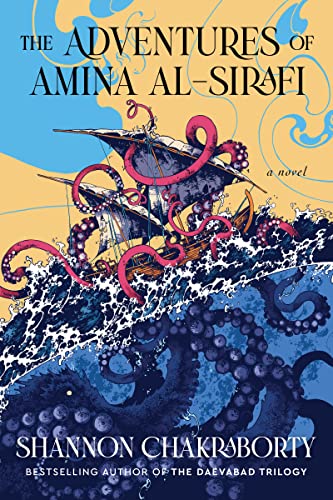
And now—finally!—we arrive at The Adventures of Amina al-Sirafi, the first book in the Amina Al-Sirafi trilogy by Shannon Chakraborty. (The next book, A Tapestry of Fate, drops this May, and I have requested an ARC, which I am watching the mail for every day since I shut the back cover of the first one.)
Blurb: Amina al-Sarafi is a middle-aged mom, living out her days in a remote location with her mother and daughter, and absolutely nothing exciting happens to them. But that’s not how it had always been, and soon enough Amina’s seafaring days are going to catch up with her. With her daughter’s safety on the line, there’s nothing she wouldn’t do, including return to piracy and even dig up her old crew to chase after a dangerous wizard and face monsters and old enemies… or maybe she was secretly longing to do this all along?
I had the best time reading this book. The best. In my defense, it is a great heist/caper/hero’s journey/fantasy/historical/adventure/pirate story with more-than-decent writing, and literally no one in a book club of forty or so disliked it. Nearly everyone had a great time reading it, too, and we ended early (for once) because no one had any real bones to pick. (We gave it a round of applause.) My biggest issue was the use of “is it not?” (a strange but very passionate pet peeve of mine). That, and the trans plot felt forced. Okay, one other thing: the asides were not obvious enough, and they could have been much clearer. But overall, I was a very happy forty-something version of the adventure fantasy and Indiana Jones fan I was in elementary school. I was right there with Amina, swashbuckling. She’s my new patron saint of restless moms, and the sorta pulpy and Sinbad-esque history feel was exactly what it should have been.
I did question Chakraborty when we were suddenly Life of Pi-ing it like four-fifths of the way through the novel, but in the end, I was okay with it all. This is writing with a cultural and religious perspective that is not exactly what I am used to (meaning Persian, Middle Eastern, Islamic), and I had to let it take magical twists if it needed to.
My favorite perspectives at book club:
- -I’m all about “supporting women’s rights and wrongs.”
- “I felt like I was reading a movie.”
- “We love when women cause problems.”
- “She lets her experts be experts, which makes her an expert at being a leader.”
Be prepared for a modern voice speaking through a historical period—it’s going to be anachronistic, and I’m sure Chakraborty realized it. Also, be prepared for religion to cause some tension, but also to solve some things—this book is a safe space for Islam and folk religion, and even a couple of other religions. It’s also a safe space for people who muck stuff up and for those whose intentions go awry. And it’s a playground for moms who were once kids reading A Wrinkle in Time and Treasure Island and who need a little adventurous fantasy in the middle of their often-very-serious mothering. Thank you very much, Chakraborty; this Dalila girlie will be first in line for book number two.

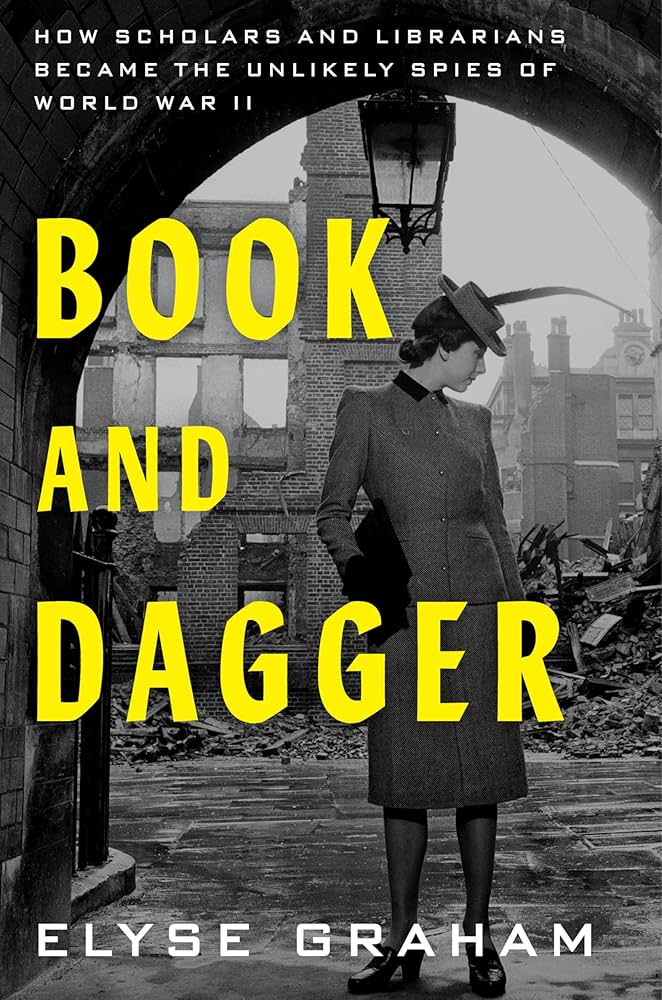
Whoops. Three books to read in two weeks, and the last one is nonfiction. Yikes.
Blurb: When the US entered World War II, it didn’t have a formal intelligence agency, at least not anymore. Grappling to quickly create something adequate for the current demand, the government started recruiting professors, historians, even librarians to get their hands on obscure information and make sense of it. Some of these academics ended up on missions overseas, becoming spies and field operatives, helping win the war with their expertise in ways no one expected.
I’m gonna be blunt: few people in my book club thought Book and Dagger by Elyse Graham was a good book. I did struggle to keep with it and listened to most of it (but still finished it). The main complaint: it did not deliver on its thesis. The other main complaint: it did not attempt to deliver on its thesis in a very cohesive, interesting way. I think the best critique of Book and Dagger is this: it’s an article masquerading as a book. Maybe a few articles. At best. And what we all left thinking: if only this had been an historical fiction novel! Then all the repetition and hole-riddled narration could have been used for a thrilling, character-driven story. Maybe Graham doesn’t have that sort of writing in her. Pity.
I admit I felt fleeced. I’m a book nerd! Book nerd spies sound thrilling! Turns out it’s not. Yet another book with the marketing theme of “Let’s sell this book to book nerds.” Boo on you.
Well, after all that random history and lack of character through-lines, I was bored for many of the 300 pages. But not all of them. There were some interesting things. But in the end, I’ll be pulling more for the recommended follow-up movies and books. Movies: Sneakers, Down Cemetery Road, and The Falcon and the Snowman. Book: HHhH by Laurent Binet.
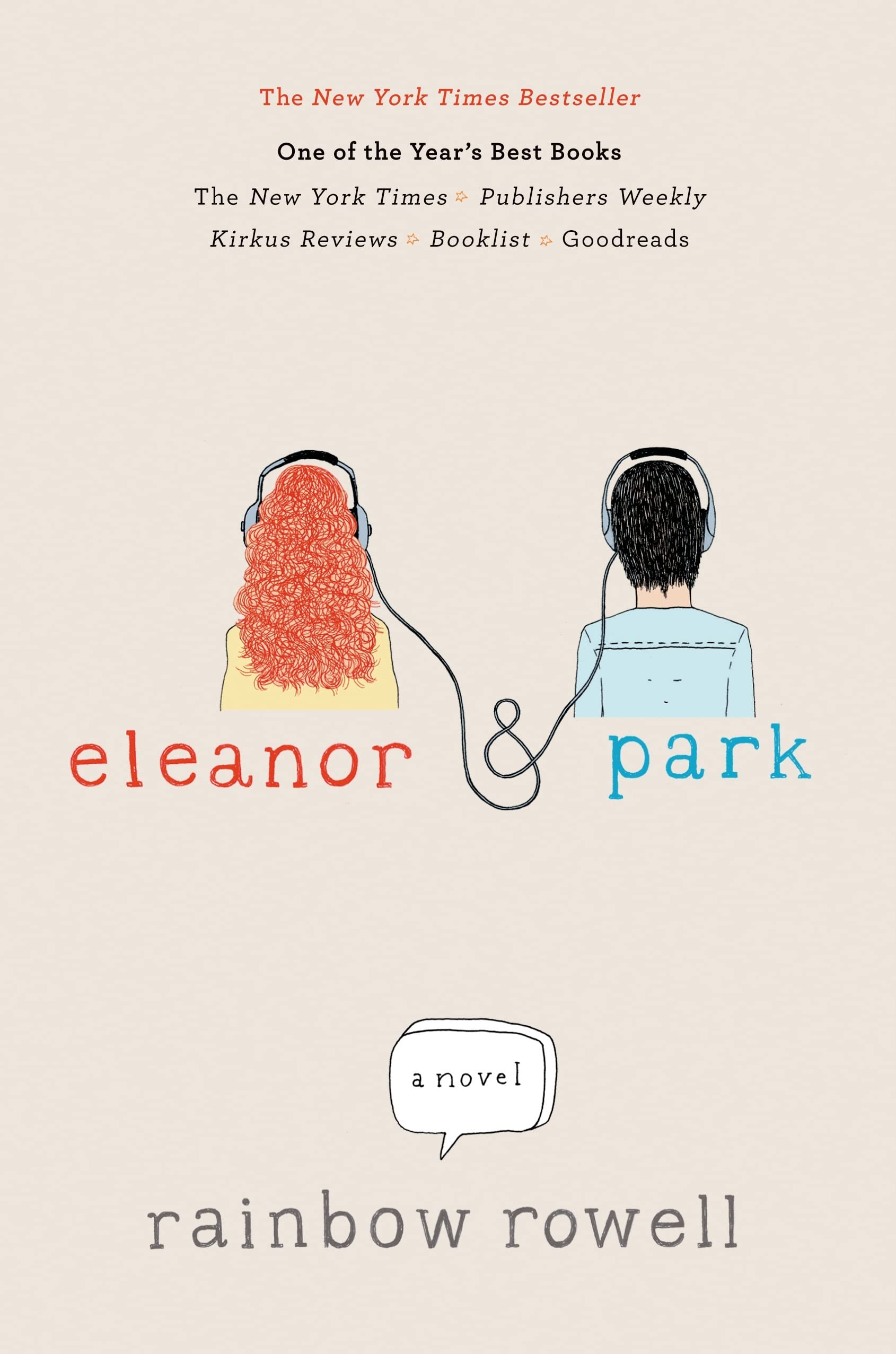
And then I used the very few days left in the month of February to finally do a Valentines read, Eleanor and Park by Rainbow Rowell. I have been meaning to read Rainbow Rowell for so long, and to read this book in particular (since 2013, I guess, and getting her confused with Raina Telgemeier. It’s simply a name thing). I am so glad I picked this one up this year. Though I’m sure there were other Valentines reads I would have enjoyed, this Printz Award-winning modern classic is as solid as it gets. And I couldn’t put it down.
Blurb: Eleanor doesn’t fit in when she moves back home after a year of being kicked out by her horrible step-dad. Park has an empty seat next to him on the bus. And this begins the year-long story of how two weird and wonderful sixteen-year-olds slowly come to know and be known by one another. But their struggles are all too real, and surviving them will take everything they have left. Maybe too much.
I thought this was going to be lighter than it was. It didn’t take too long, though, before I realized I was back in the domain of Jacqueline Wilson, a British author who wrote about teens with real struggles (divorce, abuse, homelessness, etc.) for teens and helped revolutionize YA literature. Because Eleanor especially is in a really horrific and sticky situation, and we are really immersed in her helplessness as a minor. I was on tenterhooks about her every page of the book, even as I was also rooting for and worrying about her relationship with the endearing and imperfect Park. Rowell wrote the teen perspective (first person, from two POVs bouncing back and forth between chapters, not as overdone in 2013 as it is now) awesomely. It was so specific, so intimate, and so really real that I felt a little voyeuristic. But I’ve been a teen. And I was sucked in—there was no way I was pulling out early.
Eleanor and Park really is both sweet and tense, but the real genius might just be the way it presents physical romance between teens as normal, natural, and even healthy and healing. I can’t think of a single other book I’ve read that is this frank and freeing in this area. Begone stigma and shame! Enter exploration and happiness that is authentic and, well, beautiful to read about, even if you are forty-something. I wish I had had this book around when I was that age, but I wonder if—during the height of purity culture—I could have accepted it and not overlaid it with my own shame and stigma.
Be all that as it may, you don’t need to wade into the psychology or gender studies or whatever that far. Just cozy up and—if you are happy to read YA—enjoy this gem of a story with characters you aren’t likely to forget.
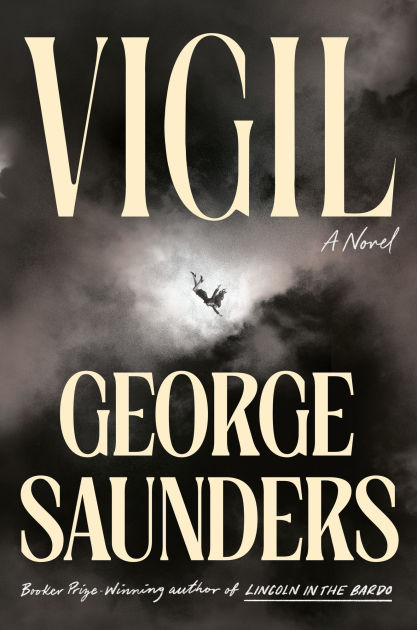
By now, on like the last day of the month, I was pushing it trying to squeeze in an ARC, but man am I behind on my ARCs. And yup, George Saunder’s new novella Vigil has already been published, though just a few weeks ago. But I had asked for an ARC at the last moment, and the publisher graciously gave me one that was probably sitting around lonely and purposeless. I don’t know. I made that up. But I actually got to it pretty quickly, considering.
Blurb: Jill “Doll” Blaine has been sent to comfort the dying hundreds of times. It’s a great purpose and she’s good at it. But her newest charge is a bit… sure of himself. And if he can’t be sorry for anything, anything at all, perhaps there isn’t any comfort she can give him. Then again, who has time for that when she’s so busy chasing away all the other spirits who keep crashing K. J. Boone’s bedside in order to make him squirm for what he has done?
The best way to discuss this book—or at least the easiest—is by bringing up other books. Let’s start with Lincoln in the Bardo, probably Saunders’ most famous and well-liked novel. I luuuuurve that book. It is a strange, trippy, book though, blending history (the death of Abraham Lincoln’s son) with ghosts and grit (no blushing allowed) and high-soaring, breath-stealing, acrobatic language. And so, so much imagination. Saunders must get accused all the time of having a wild imagination. The presentation, too, by which I mean both the structure and the writing style (and the way it all sits on the page) is experimental, takes some real thinking, some getting used to. With Lincoln, I was confused for a bit, and then very happily (white-knuckling it) along for the ride.
Which means that lots of readers were expecting something—if not similar—then at least of a similar caliber when they started Vigil. What they got is something similar, but not of similar caliber. I can’t believe I am giving Saunders a 3.5-star review, but I am. (Eek!) Sure, his daring and exciting use of language is there, and darned if he isn’t still super imaginative. But the story? The pivotal character? The preachiness? The embarrassing nudeness of the climate crisis messages? Erg.
Which is where we transition to talking about the next book. I heard or read somewhere a review of Vigil that asked what Saunders was doing writing Tuesdays with Morrie. Burn! Unfortunately, it’s not a difficult question to come to after reading Vigil. Because—gasp!—it reads like the author of Lincoln in the Bardo has written Tuesdays with Morrie. Which means it’s a little grittier, a little more off-the-wall, and both more imaginative and literary. But not like Lincoln. No–more like the two had wed.
And then started a polygamous marriage with A Christmas Carol. Because there is no discussing Vigil without dragging A Christmas Carol into it. I have to presume that Saunders was purposely using the Dickens novella as inspiration for Vigil. It might even be called an adaptation of sorts—it straddles inspiration and adaptation. Obviously, Boone is a modern-day Scrooge, and Doll is the principal spirit visiting him to give him one last chance at… peace? I dunno’. I was a little adrift on the point of the haunting here. I was a little adrift on how the afterlife could work in this world. Do I understand that Saunders is Buddhist? This isn’t a Buddhist book, from what I can tell. Some readers have accused it of absolving the climate-wrecker in the end with its laissez-faire approach to Boone’s ending and Doll’s eventual epiphanies, but I don’t think you can read the entire book and believe Saunders is impressed by Boone’s insistence that anyone else would do the same and that he did his best. I just think the ending was—fluid. Wishy-washy, perhaps. The literati would call it “open,” as in open to interpretation.
Just one little complaint. (I haven’t actually complained about anything, you might notice. I’ve just tried to tell you what this book is and what it isn’t, and let you decide if that’s your sort of thing and if you can handle it after Lincoln, etc.) The complaint is that I was sure Jill “Doll” Blaine was from the 40s/50s until pretty close to the end when we find out, nope, it was like the 70s. That oversight was a mistake. Plus, I didn’t really believe it. Especially when the tone of this book—the feel—was a smear between the early twentieth century and the late 2020s. There was something very A-line dress and James Cagney-voice about the tone. A Depression-era newspaper tycoon meets contemporary oil baron kind of thing. The 70s didn’t fit.
I feel bad about this review. Because I didn’t like Vigil, but I didn’t hate it either. I was intrigued, but it was easy for me to put it down when something else distracted me. I enjoyed some of the twists and turns, the main character, the imagination, and some of the writing. But not so much what it had to say or how the story was told. Yipes. Hope I don’t regret that, but I’d rather be reading Chakraborty.


 the starving artist