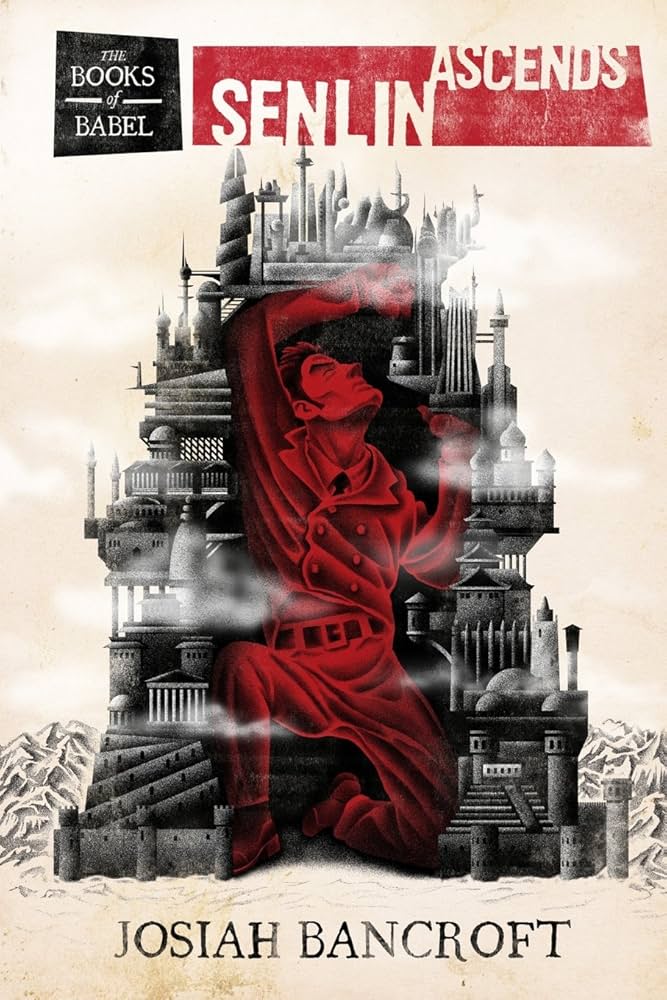

Senlin Ascends (The Books of Babel #1) by Josiah Bancroft might have been the first book I was excited about in 2025, like as I was reading it. I just somehow didn’t expect it. I suppose the cover doesn’t give much (including the mood) away. I don’t hate the cover, but the overall impression is somehow lacking. The title too. Doesn’t really do much for it.
Blurb: Quiet, country teacher Thomas Senlin thinks that taking his new bride to the world-famous Tower of Babel for their honeymoon is a marvelous idea. But when she disappears before they even get inside, he has to rethink his plans. He will ascend the tower and find his lost love, but the tower is anything but hospitable: one city after another stacked high into the sky and teeming with steam-powered machines, dastardly residents, assassins, confusing rules, temptations, and mayhem. Not only is it nearly impossible for Senlin to escape each level in turn, but he might not even survive to tell the tale.
So, steampunk. I am really drawn to steampunk, and this had some sort of Willy Wonka thing going on (and I adore Roald Dahl), but much grittier. And levels felt sort of like levels of a game but also like allegories, so maybe it had some sort of Victorian fairytale feel to it, too. I found it fun and was all wound up in the story but maybe even more the place since my favorite character got very little play time (being mostly missing). I gave almost every category a 3.5 to 4.5, except personal impact. (It is not the sort of book.) Loved the writing style, originality, presentation, world building, readability, and memorableness. I wanted to dive right into #2, (Arm of the Sphinx, then The Hod King and The Fall of Babel), but I just haven’t found the time yet.
It did drag a little now a again, but in my notes, I wrote that “it’s a specific type of fantasy with, like, eddies.” It’s in the style of older adventures with episodic places on a journey. I did figure some stuff out ahead a time, but even if you know the plot, you can’t possibly know where Bancroft’s imagination is going to take you next. What we have here is a pretty straight-forward (and also over-the-top) hero’s journey, with the characters twisted. (I am currently revising one of these, myself.) The writing itself is excellent, especially considering the genre, though some readers called it “funky,” with lots and lots of subtle reference. The story was well-crafted. I LOLed sometimes. It was like a whimsical, weird Dante’s Inferno (though yes, Inferno’s already weird, but not whimsical). It was meant to be goofy, not scientific, more wild and fun and fantastical, and that made it a new fave for me.
This series is one of those self-pubbed success stories. It’s not as successful as I feel like it should be, actually, but Bancroft did get a book deal and the books do sell. Readers love the world. There have been comparisons to Neil Gaiman, but that’s not doing Bancroft any real favors right now (due to a scandal, if you don’t know). The writing style is similar in its frantic broodiness, its moral themes and constant surprises.
Some readers said they didn’t care about Senlin or that he was boring; I don’t agree at all. I like him. I care. And the Goodreads rating is currently sitting it 4.31, which is really high. Even though this book is plot-driven, there is engagement with the characters. I loved all the flashbacks, because I missed Marya (as I’ve already said), though Bancroft did give us some other meaty (kick-butt) female characters to grab hold of in the meantime. There were maybe too many interesting characters, because I started to get confused when they would show back up.
I had the best time reading this book. I knew, straight off, that this was going to be a new favorite, which just made it fun.
The only thing that this book lacked was that unquantifiable addictive quality, but I suspect it might have sacrificed that for actually good writing. It’s a theory. It’s like reading LOTR versus Harry Potter. One is slower going, more of a challenge, whereas the other is unputdownable, but I would never say HP is a better series. On the contrary. Writing that keeps you up all night is not necessarily the most rewarding. I will be reading the whole series.
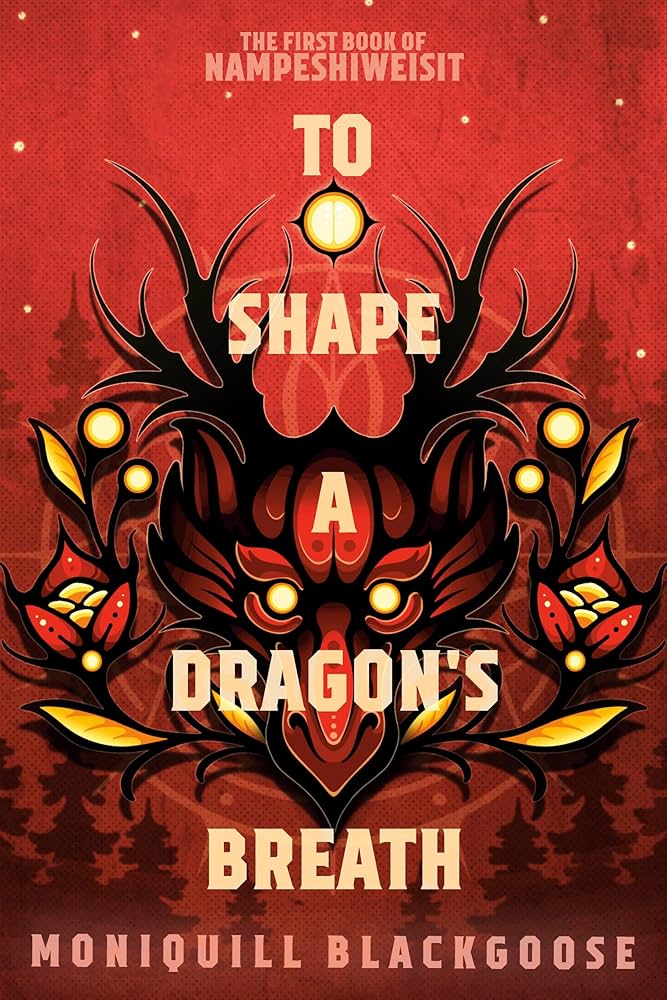

I had a little harder time making it through To Shape a Dragon’s Breath (Nampeshiweisit #1) by Moniquill Blackgoose. (In fact, I think I started it in 2024 and then had to pick it back up months later to finally finish it). It’s not that I didn’t like it. I really loved the premise, the world, and that the author is writing Indigenous fantasy as a Native herself. But I was not all in for the execution.
Blurb: Anequs is an island-dweller in a small, coastal Indigenous community. But when she finds a dragon egg and, in a ceremony done with the old ways, the hatchling chooses Anequs to pair with and make a Napeshiweisit, the colonizing power isn’t at all happy. So Anequs makes a deal to go to their dragon-trainer-training school until she has the tools she needs to wield her skills—and her dragon—safely. Then, she can return to her people, where she and her dragon belong. But the wheels of power and politics are already churning, and it will take a lot of will, cunning, and luck to come out all of this whole, and in line with her true destiny.
There’s a real mash-up of exciting things going on here. It’s kind of North America being colonized and like the Victorian period, but by a Nordic-ish people. There are elements of steampunk, but also lots of Indigenous culture (specifically around what we now call Nantucket and Martha’s Vineyard, etc.). The series is polyamorous, queer, and dragon academia. It has anti-colonial and abolitionist themes. So, plenty to recommend it, to get people excited.
But despite the great reviews, I just… couldn’t. For one, there was little to no actual struggle in this book. Things just happened, they eventually just worked themselves out. And the whole time, Anequs was just floating along, not disturbed much at all by the things that were happening around and to her. In other words, the heroine had no agency, and she took none along the way. She was passive. And also not flawed. She’s like a logical little robot who always has the best of intentions. Also, the dragons get a bit sidelined, their roles ending up quite boring.
That’s the gist of my experience here. I didn’t hate it because there were things to enjoy. But the plot or the character development were not one of them. I was quite bored by the story, even sitting plopped down in the middle of an interesting world with some potentially fascinating characters. When a hero has no growth arc and their personality, life, and culture lack nuance, sorry, but I am out. I don’t need to continue the series, but I am wondering where this author might go from here.
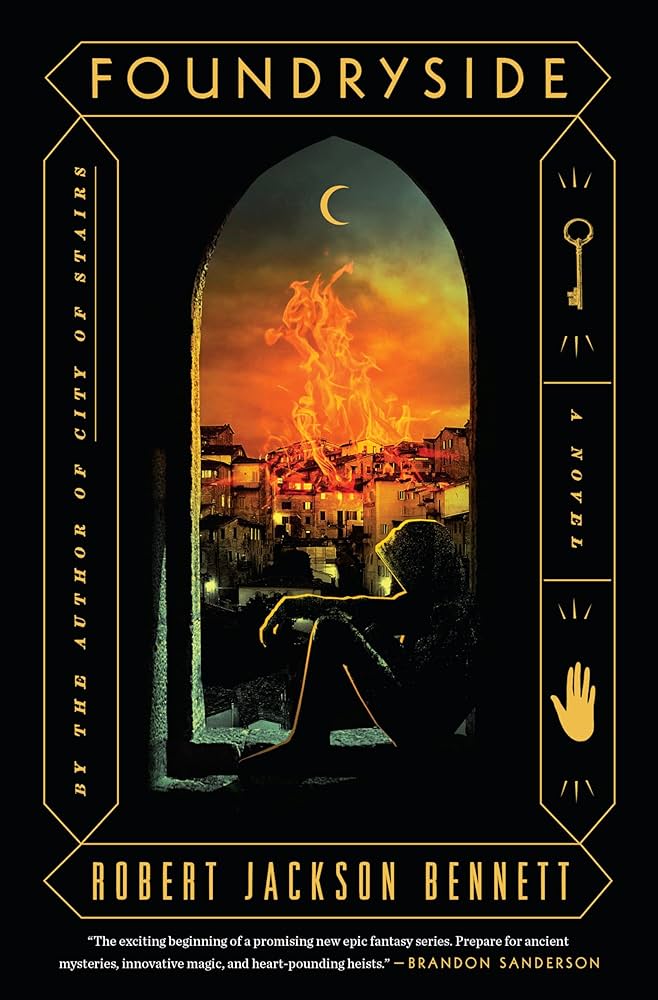

I have to dig real deep here to remember exactly what I thought of Foundryside (The Founders Trilogy #1) by Robert Jackson Bennett. I remember reading it. I remember starting out in a heist in the filth. (I have a sort of filth-phobia.) Good thing I took notes.
Blurb: Sancia has some pretty remarkable abilities, but she’s not really supposed to have them. Heck, she’s not really supposed to still be alive, but she doesn’t quite remember why or where she came from. What she does know is that her abilities make her into a dang good thief and thieving pays well enough to keep her fed in the slums of the top-heavy city of Tevanne. She doesn’t go looking to meddle with the elite and their power structures, but it happens, and when it does, she better make some allies pretty quickly before she’s executed by a nameless force. But who can she trust?
Bennett cranks out the fantasy series. He has won a number of awards (like the Hugo), and his other well-known series are The Divine Cities, and Shadow of the Leviathan (The Tainted Cup, etc.). The Founders trilogy was completed in 2022 (Foundryside, Shorefall, Locklands). The Divine Cities is also a trilogy (City of Stairs, City of Blades, and City of Miracles). His current fantasy-mystery Shadow of the Leviathan series has been gaining the most plaudits and attention (The Tainted Cup, A Drop of Corruption, and A Trade of Blood, which is not yet published and may continue longer).
Foundryside was a Nominee for Readers Favorite Fantasy in 2018 and is another top-scorer with Goodreads ratings (4.16, but I didn’t agree with To Shape a Dragon’s Breath, did I? Also forgot to mention earlier that I really dislike that title). Foundryside has a decent title and a nice cover. Where do we go from there in this magical, Italian-adjacent heist novel? If you like traditional fantasies, the standards, then you’ll probably like this, which is traditional in a new, interesting world. I wanted more character focus and setting immersion, but the world-building is used more for action and plot than for anything else. I thought the writing style was solid (utilitarian, which is fine by me) and overall I’d give it a 4. I liked it but wanted more relationship development.
Specifically? I was never confused. It’s a cool world with cool magic ideas, but Bennett is never taking us by the throat. Readers at my book club who get into the nitty gritty of the world systems called it a “pretty democratic magic system.” But are these computers? (You have magic + technology + a programming language.) Did that make this sci-fantasy? Personally, I just enjoyed it. I don’t need something to change my life every time. Foundryside isn’t a masterpiece or even a five star for me, but it was pretty solid and, as one reader put it, “servicable.” I thought the ending got repetitive and therefore boring. And also the tone was all over the place. Fun heist! Brutality! Exploitation! Mad scientist! Children trafficking ring! A talking key! (who sounds in many heads like Billy Crystal). There may have been some inconsistencies and anachronisms.
I would like to finish the trilogy, but I am wondering if I should skip instead to The Tainted Cup or even Brandon Sanderson’s Mistborn series. It’s looking like I might like both of those better than this one, which I did like. I just didn’t love it, and I had to keep reading instead of worrying about things
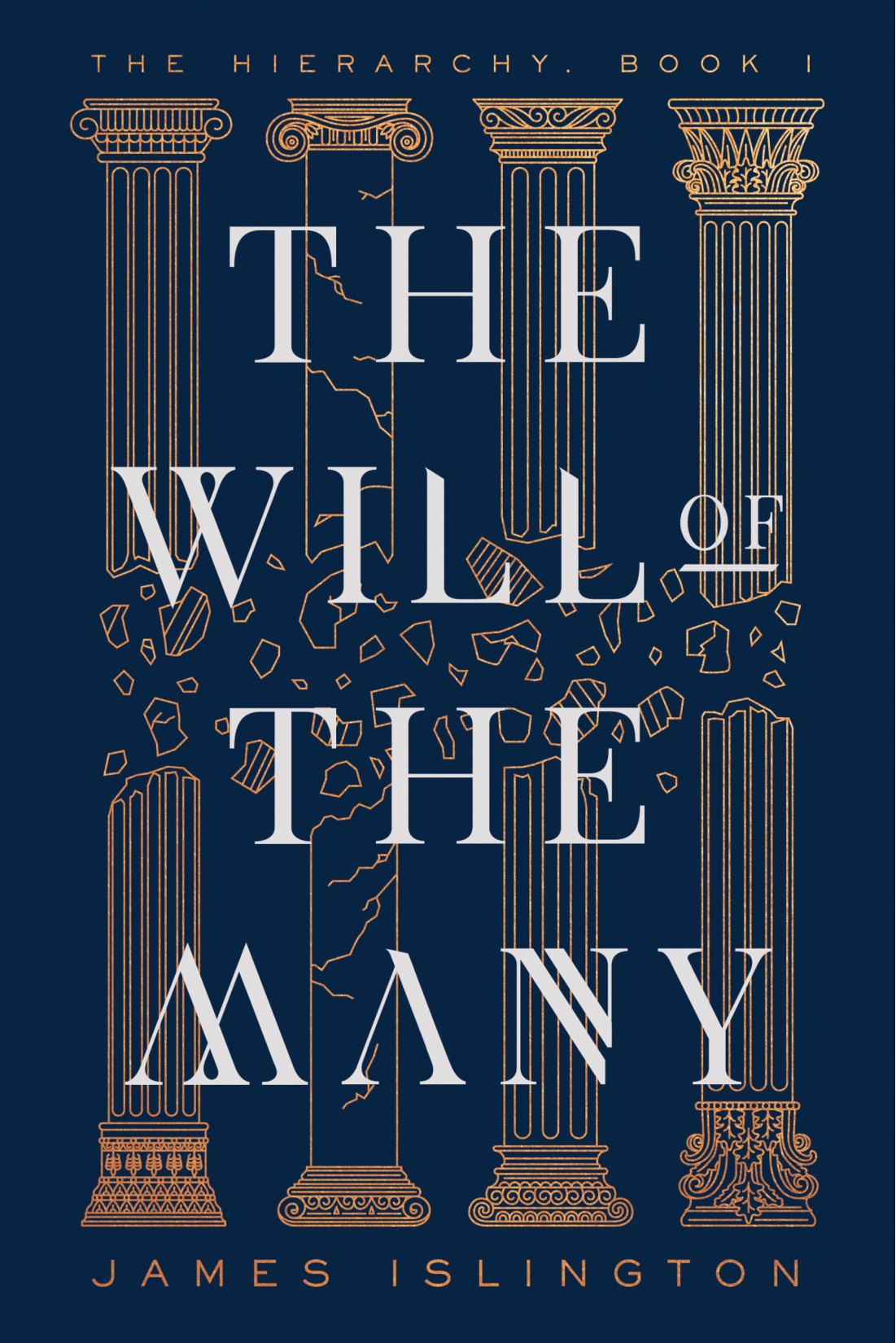
I’m going to tell you something about James Islington’s The Will of the Many (The Hierarchy #1) that I didn’t know and that really messed up my reading experience for about the first sixth of the book: this series is a speculative, Greek-inspired YA academic light fantasy. I read the beginning all wrong. I had Vis too old, I had him in the wrong clothes with the wrong architecture, I was reading as too old of a person (which often just takes an attitude adjustment to correct, not actual age-reversal)… and I was confused when I realized this was going to be a kid at school and this world was operating on some sort of magic-tech. It does take quite a long time to get there. Heck, it takes a long time to get anywhere in the book—just look at the size of it. And even after settling myself, the book sort of took another giant turn at the end and you’re like, “Wait, it’s that kind of book?” But despite personally loving to know what kind of world I am entering when I crack a spine, I don’t want to ruin anything for you. So you’re on your own after what I just told you. (The cover’s not doing us any favors with figuring this out.)
Blurb: Vis is on his own, a rebel buried under the enormous hierarchy of the Catenan Republic. But when his strength, intelligence and wiles see him yanked out of an orphanage and placed on a secret mission in the prestigious Academy, he’s got one shot to hit at the exposed underbelly of the system that destroyed the world he was born into. But there are so many other plots criss-crossing at the school and in the upper echelons of power that Vis’s survival becomes a minefield littered with blood.
I did flip to audio eventually with this book, because I tend to do that with really long books. It just makes more sense for me to listen while on long commutes and pick up something shorter for bedtime reading. And it forces me to keep turning the pages when things get slow or the heft gets daunting. This book did seem entirely too long, to me. It didn’t need to drag on quite so much. The pace really picked up later.
At book club, The Will of the Many was totally some people’s jam. Despite yet another incredible Goodreads rating, I found it, well, dry (the writing style, I think?), emotionally detached from the characters, very YA, and removed in setting. And much like To Shape a Dragon’s Breath, we have an MC who things are happening to, not the other way around. Without someone telling me what this book was, I spent the first chapters confused about setting and culture. Was it steampunk? Was it futuristic space? I was really flailing. And then I’m suddenly in Billionaire Hogwartz? (Okay, nothing happens suddenly.) And the MC had never made a difficult choice that propelled him into the book. We just skipped that.
Dumb little thing: everyone had curly hair and very similar descriptions.
Big thing: a significant portion of the reviews I read (and heard) said that the ending made the book worth it and that’s where all the high-star ratings came from. Hm. I always feel annoyed when this is the case. I mean, why did I have to read all that nonsense to get there? (Will of the Many wasn’t nonsense, just a really long not-my-cup-of-tea.) Can a great ending justify a boring book? Apparently. (Admission: I hadn’t finished the book when I showed up at book club, but everyone’s comments encouraged me to finish. The Survivor/Hunger Games/cult ending was much more engaging than training on an estate or school days.)
So, despite how much some peeps on Goodreads and in my book club loved it, I just can’t. I don’t read just for world-building or ideas. I read for engaging characters who exert themselves and grow in complex relationships and immersive settings which make cool world-building come alive. If an author throws in exciting plotting and/or acrobatic wordsmithing to boot, then that’s bonus points. The Will of the Many was chugging along on ideas and world-building and lots and lots of normal words, grabbing my attention for a moment here or there when I liked some strange limb on this Frankenstein’s monster of a book. People love (like really love) this series, and they also love Islington’s Lucanius series. Maybe I could try that? We’ll see.


 the starving artist