This is largely a story of first-in-a-series.
It’s also a long story because the most yet-unreviewed book of 2025 (for me) is speculative fiction. Let’s jump right in.

It feels like I read The Ministry of Time by Kaliane Bradley forever ago, maybe in a different life. Or maybe I was yanked through a wormhole and lost track of time. Fortunately, it’s not a book or a reading experience I have really forgotten. Perhaps because my husband read it at the same time and we attended book club together—both of which are rare or even unprecedented. He participated because it is a time travel book (more on that in a sec), and short, and I thought he’d enjoy this particular group of people (who I had only been meeting with for maybe four or five months at the time. He has gone back once more, for the holiday party this past December).
So, time travel. Ministry of Time is difficult to categorize, genre-speaking. It leans more literary though I would say it stops a little short at popular fiction. It is historical fiction, for sure, but also speculative, so sci-fi. It is romance but lacks some of the romance markers. It’s also British workplace drama. And climate fiction. And a spy thriller. And it isn’t even (as in distributed equally). Chapters and sections go by while you are reading a romance, and others (nearing the end) where it is a sci-fi thriller. The historical fiction arrives via a few different characters, but is focused mainly on the love interest, Graham Gore, who was actually a really real historical polar explorer and military man turned fictional character. Kirkus called the book a “time-toying spy romance,” but I like that Goodreads reviewer (Maxwell) called it “more… slice of life.”
I don’t know how much I can speak to the details of my reading experience. I think I recall that it felt needlessly pretentious at times and atmospherically poetic at others. I know that I 100% wished the editing process had gone on a whole lot longer. The voice was very next-gen, meaning young, meaning not my gen. It had potential. Plenty of people liked it.
Goodreads Maxwell and I basically had the same reading experience. Ministry was everywhere in 2024, and people were sending it out through word-of-mouth. I love a genre-bender, and this covered many of my favorite genres in one book. But when I used the word “uneven” earlier, I meant it as a critique. I thought I was going to love this book, but the pacing and the merging of ideas and genres made for an extremely bumpy ride. In the end, I was unsatisfied, disappointed. It is rather slow-moving until suddenly it becomes another book altogether and then just stops. The end.
It has pretty low Goodreads reviews, but this may be due in part to some plagiarism allegations by people who didn’t read it and are unfounded. Or some people loved it and then lots of people read it and many people felt like I did about it. I gave it a 3-star rating on Goodreads, but this translated to a 3.5 on StoryGraph (where they allow quarter-stars). I didn’t hate this book and there were memorable things about it, but what I loved was buried under my annoyance at the lack of actualization. There are fans. It was touted as a best book of 2024 and was the Goodreads Choice sci-fi favorite book of the year. If you’re curious, I won’t discourage you from reading it, especially since it’s pretty short. Certainly, there were things I totally enjoyed about it. But I think you can do better. (Sorry, not sorry. There’s a part of me that hates to steer you around this one, for some reason.)
Note: The book The Ministry of Time has nothing to do with the Spanish TV show Ministry of Time. They simply have the same name, and obviously, there is the concept of a government time travel agency. No big thing. Nothing new under the sun. Otherwise, they look completely different and I’m told there are utterly unrelated.
First line (which I blogged): “Perhaps he’ll die this time. He finds this doesn’t worry him. Maybe because he’s so cold he has a drunkard’s grip on his mind. When thoughts come, they’re translucent, free-swimming medusae.” And I was hooked.
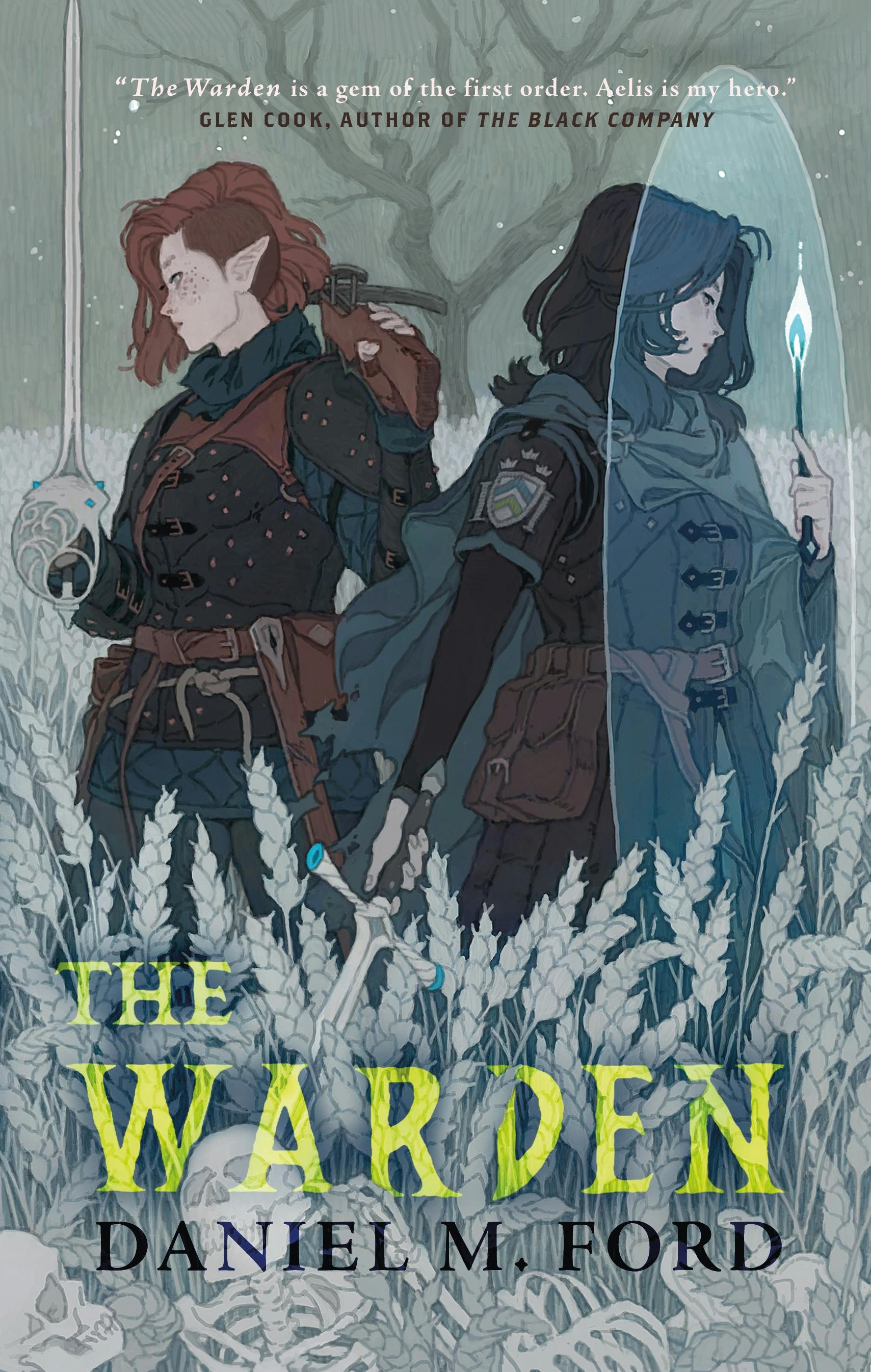
I read the magical, medieval-esque fantasy The Warden (Warden #1) by Daniel M. Ford less than a year ago, so we’re getting somewhere. I also have book club notes. I’ll try to keep it brief.
I also gave this book 3 stars on Goodreads and 3.5 on StoryGraph. It was my first experience with D&D-inspired fantasy, though I have read a few more since then (and have started writing my own, actually). It was also my first experience with a cozy, but I didn’t totally realize it at the time. Maybe because it wasn’t as cozy as, say, Monk and Robot or You Can’t Spell Treason Without Tea.
I was disappointed. Here’s my list of grievances: the ending was the bad kind of cliffhanger and it should have ended chapters before; the romance was lame (it was sapphic but lacked buildup and chemistry); flashbacks were not handled deftly and how is her memory so good?; Aelis was a pretty miserable character with not much redemptive about her; I could see the twists well ahead of time; there were writing errors and man did Ford like the word “very”; magic words were left out, left to our imagination; Aelis talked aloud to herself so that we are given knowledge (yikes!); in a discussion group, we were confused about the world’s details, especially its history and the magic system; the characters aren’t consistent; Ford wrote himself into knots with the sentences; chapter titles gave things away; and as one of my book club friends said, it had “the worst boss battle in the history of boss battles.”
I felt as if I were playing a video game. There is always some of that with D&D/RPG-inspired books, I think, but this was obtrusive/obnoxious for me. It was like my player was wandering around the board and chatting with NPCs the whole time and I was like, “I don’t even like video games.” Perhaps this is why it felt like things happened to Aelis and not the other way around. Not to mention Aelis felt like a female character written by a table-full of men. Like most D&D campaigns.
It’s cozy, yes, which means low stakes, basically. But it was meandering, almost episodic. Perhaps others want something with zero long-term tension, but I was bored by it plenty of times.
It was pretty easy to read despite the kinda bad writing. I wanted to like it but find that I can’t really defend it.
And that’s about it. I hate to be mean, but I wasn’t impressed or even entertained by this book and found plenty of allies at book club. But, you know, there’s an audience for everything and Warden (and the series) has its fans.
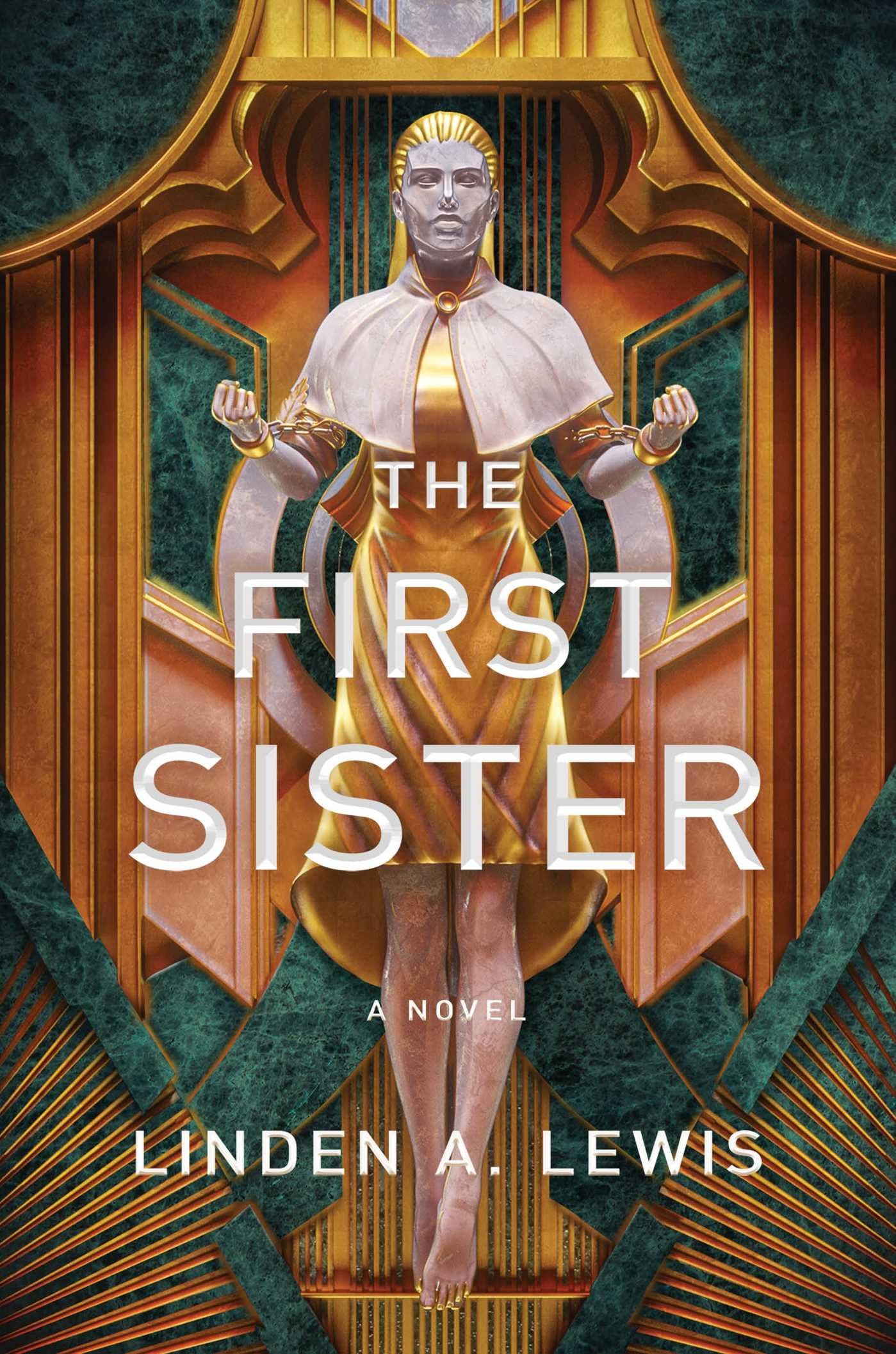
We’re not having much luck here with these old speculative reviews, so far, (sometimes you get in a rut,) though I did round this rating up from a 3.75 to a 4 on Goodreads. The First Sister by Linden A. Lewis is the first in a trilogy that I might (but probably won’t) continue to read, though I was told not to read the blurbs for 2 and 3 because of needless spoilers.
There is a lot going on in this book, probably too much. The characters were intriguing, though I liked the descriptors I heard of them at book club, like “ambitious” and “generic.” Sure, I can understand the comps of Ender’s Game, A Handmaid’s Tale, and Red Rising, but this book doesn’t live up to those giant titles.
There’s also not a clear good guy and bad guy, at least not in the first book, and some people enjoyed that ambiguity (but not me). Speaking of which, it’s not so much about the “first sister.” There are a lot of convenient turns in the plot. And the writing is inconsistent.
And another obnoxious cliffhanger.
I mean, I kinda remember First Sister. It’s a space opera in a queer-normative society with prostitute-nuns and a mute main character. There’s a dramatic ending which also isn’t an ending. Parts of it were utterly forgettable (and for some odd reason I really hate the cover). First person. Present tense. Plus, epistolary (which reads not at all like actual dictation).
Some people liked it. I can see why you’d try this after some other series. But it wasn’t totally for me.
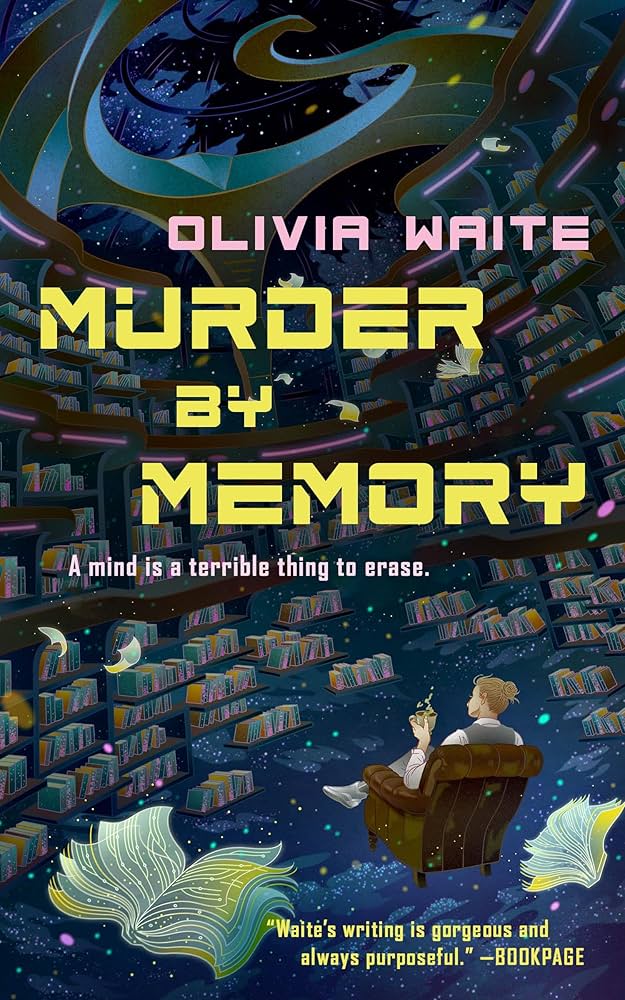
This slim (hardcover) Murder by Memory (Dorothy Gentleman #1) by Olivia Waite takes the prize out of this group of four reviews, though that isn’t really saying much. I did enjoy it. I would read another in the series; number two—Nobody’s Baby—will be published in March. Though I am super annoyed by these series of novellas that stay in hardcover forever. Maybe someday they will stick the series together into one book, a la Monk and Robot or the Murderbot series and unlike Claire Keegan. I am so exasperated by when publishers do this that I borrowed this title from a friend to read it.
She loves this book. I liked it. I enjoyed it. I wasn’t totally taken in.
But cozy space opera detective novella (with a sapphic, knitting, aunt detective)? Cool.
In the end, I rated it a 4.25, which is better than what I’m remembering. Let’s pick up the next one in March (borrowed, again, because twenty-something dollars for a novella!?!) and see how we get along, perhaps review it like I should be doing, in real time.
I’m going to break here so that it’s a readable chunk. I will have two more sets of multi-book reviews for speculative fiction coming your way soon. Each coming set has at least one title that I loved (unlike this one, unfortunately, though I would recommend Murder by Memory and probably The Ministry of Time, just not to everyone I see.


 the starving artist