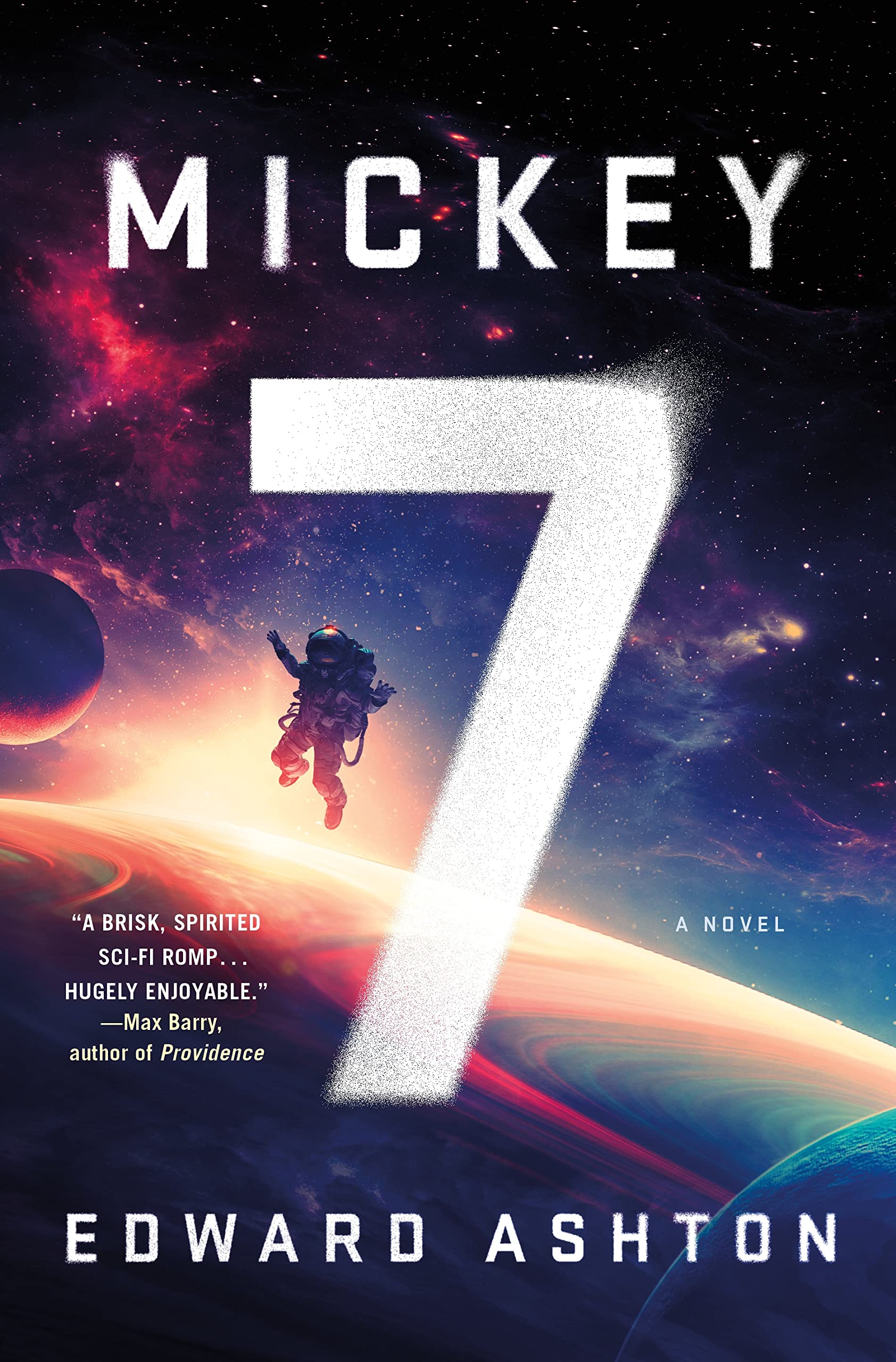
I am always excited to read a book that has a movie out, especially a new movie. I dunno. I find it interesting to see what has been done in the adaptation. Sometimes the experience is great. Sometimes terrible. I still enjoy the process of reading and then viewing. Mickey 7 by Edward Ashton (2022) just dropped at theaters this past spring, as Mickey 17 (which we’ll discuss later, including the name change). I waited to watch it until I had read the book for book club, which means I missed it at theaters and watched it on streaming. By the time I went to book club, this is my final opinion: the book was okay. I guess I liked it. The movie was not my cup of tea, at all, but I can have disparate opinions because the book and movie are extremely different things. The only thing the same is the premise.
Synopsis: Mickey is an Expendable. (Funny note: I wrote the first line of this synopsis and then realized it is the first line in the official blurb. That makes sense.) There’s a master copy of him in the ship-board system and when he dies doing some ridiculously dangerous thing, they print a new Mickey. Immortality isn’t all its cut out to be, just like following your toxic best friend to a new planet or starting a new colony on a hostile planet isn’t. At least Mickey has a girlfriend. And at least he’s never been made into Multiple, because that would really be the worst.
I was excited about this book. A short science fiction book (which, sorry to say, is my favorite type of science fiction—I just don’t dig the deets the way I do in fantasy) with an interesting premise. And the science of the world was interesting. I liked it. Even some of the history was interesting. (It wasn’t necessarily science-y, but for the millionth time I’m going to say that speculative fiction does not need to be consistent with our world, just consistent within itself (which for absurdism or surrealism can be inconsistent)). Actually, what bothered me about this book and kept me from loving it or fully endorsing it were the writing of the characters and a few plot things.
There is a difference between sentience and intelligence, and the book just threw the idea of sentience around like it was as easy to identify as what color hair someone (or something) has. And given that “sentience” was so important to the reactions and choices of the characters, it was never defined or explored. That was unfulfilling for me.
But yeah, the characters. I actually didn’t mind Mickey (though some people at book club did. I didn;t dislike him—I just didn’t take him very seriously). I thought he made a fine narrator I could go along with, and I also thought that his Multiple, Mickey 8, was very like him (just seen through the eyes of Mickey 7). This actually created an enormous space to explore how two people with identical bodies, minds, and memories would be affected in six shorts weeks and how they would change or just be on two different paths. The book didn’t really go there; it just hinted at it. I so wanted it to go there. Two Mickeys diverge in the wood…
Some people also complained about the ending and a “permanent solution to a temporary problem.” While I am a fan of that saying, I didn’t really agree. It was unserious sci-fi and I thought the ending was fine (if rushed). What I didn’t like…
Oh yeah. The characters. No matter how much someone(s) at book club may argue with me about this (and did), I found Mickey’s relationship with his girl to be radically inconsistent. And that shouldn’t be a huge surprise because some of the characters were inconsistent from one scene to the next. It was that romantic relationship, though, that really bugged me. When I stumbled into this flashback late in the book, I saw a whole different side to their relationship. I wanted that new info to be true (it was sweet and deep), but I saw zero reason in their current relationship to believe it. (Alright, almost zero; there was one moment that reflected it.) In other words, there was suddenly this insight into a level of maturity in these people and their relationships that I could not find in their daily interactions. Bummer. Then again, it would have changed the voice to have this story of maturity. *See note (in a bit) about it being YA in tone.
I will admit there is another thing I really didn’t like about Mickey 7. I was reading this super easy-to-read and easy-to-digest book and then something happened, and the book took an unexpected and un-foreshadowed (even in tone) left turn. Maybe three-quarters of the way through? Or more? It lost me after that, to some extent. I mean, there definitely were things—other things—that came out of nowhere or disappeared, but this sensationalist, random moment really stuck in my craw. At least at the beginning I expected action-adventure. Where we ended up for most of the story was dorm-room drama/comedy of errors and this scene topped it all. I started out excited about the funny tone (enjoyed the internal dialogue) but was more displeased with the book’s identity crisis as I continued. In fact, there were times when I thought that though the content was not always YA, the characters, the plot, and writing style was often very YA. If Ashton had aged these people down a decade, it would have made so much more sense.
I think I’ll go with a fellow book club member’s quote to round out this review, which probably sounded like a lot of complaining even though it wasn’t meant to be. “I liked the book overall but could feel there were things I wish had been different.” Sure. That. It was a little disappointing. But it was also easy and enjoyable. Read it for the vibes? I raised my hand for “okay” and was surrounded in my corner of the book club circle by other “okays” (which maybe means I am drawn to people who think like me). I would not dissuade someone from reading it. Or maybe I just have? I didn’t mean to.
What is probably a more solid recommendation: the Murderbot Diaries by Martha Wells.
“There’s no such thing as a perfect friend, any more than there’s any such thing as a perfect anything, and if you slag everyone in your life for their many and varied failings, you’re going to miss appreciating the good stuff they bring to the table” (p81).
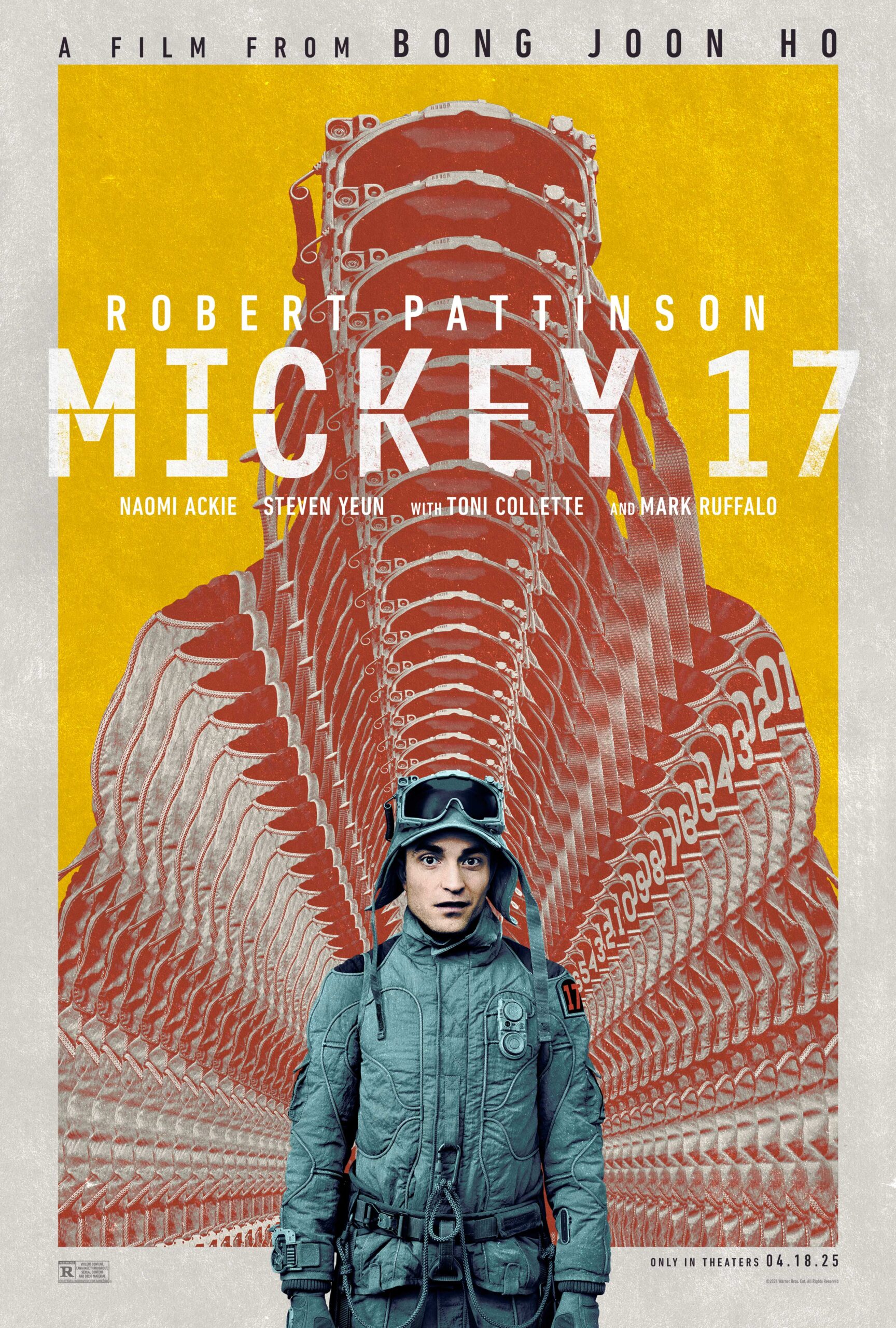
So, as I said above, the movie, Mickey 17, was not really a re-make of the book. It wasn’t even a normal adapted-for-the-screen thing. It was like one of those retro space satires/comedies got hold of the Mickey 7 concept and then made their own movie. I actually didn’t finish it because I just plain wasn’t enjoying it. Turned it off maybe halfway through. If I hadn’t read the book, maybe I would have felt differently, but it was brash and loud and, well, I guess I found it obnoxious. How was it different? For starters, the plot. And the characters (besides their names and place in the new plot). Also, Expendable iterations come out as different people—same body, different personality. (That makes for different questions and ideas.) There was a lot of religious satire (that was not in the book even a teeny, tiny bit) and goofiness, like 70s movies of 1950s sci-fi or 70s-feeling 90s movies of 1950s sci-fi. I like some of those movies, but this one wasn’t as good.
Oh, and about the name change (which comes across as eye-rolling-ly weird. Really). They wanted Mickey to have more deaths. I don’t think they needed it exactly, but it is consistent with the goofiness and absurdity of the movie’s tone.
Ehn. Not for me.


 the starving artist